


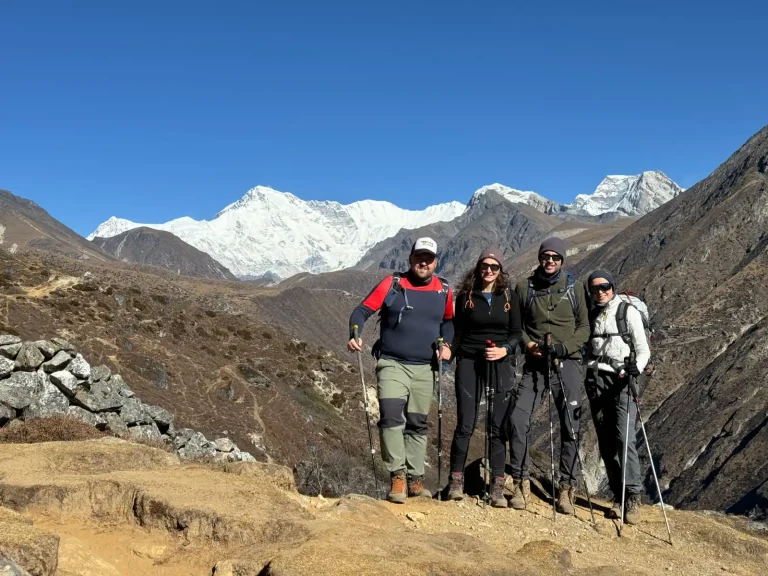


5 Best Treks in the Everest Region: Which One is Right for You?
The Everest (Khumbu) region is the holy grail of high-altitude trekking. Home to towering 8,000-meter peaks, vibrant Sherpa culture, and ancient monasteries, it’s a landscape that pictures can barely do justice.
But here is the truth that catches many travelers off guard: there isn’t just one way to experience Everest.
While the classic path to Base Camp gets the most fame, the Khumbu region holds multiple distinct trails tailored to different physical fitness levels, timelines, and crowd preferences. Choosing the wrong route can mean walking a trail that doesn’t match what you actually want out of your holiday.
Whether you want to stand at the base of the world’s tallest peak, look down over pristine glacial lakes, or completely avoid the main crowds, our curated Everest region trekking packages offer an option for every type of adventurer.
Everest Region Trekking Routes Comparision
If you are short on time, use this quick breakdown to see how the major trails compare across key metrics.
| Trek Name | Duration | Difficulty | Maximum Altitude | Best For |
|---|---|---|---|---|
| Classic Everest Base Camp | 12–14 Days | Strenuous | 5,545m (Kala Patthar) | First-timers seeking the iconic bucket-list route. |
| Gokyo Lakes & Gokyo Ri | 12–15 Days | Strenuous | 5,357m (Gokyo Ri) | Photographers and those wanting quieter trails. |
| Everest Three Passes Trek | 18–20 Days | Challenging | 5,545m (Kala Patthar) | Experienced trekkers wanting a massive physical challenge. |
| Everest View / Short Trek | 5–7 Days | Moderate | 3,880m (Everest View Hotel) | Families, beginners, or those short on time. |
| Jiri to Everest Base Camp | 18–22 Days | Strenuous | 5,545m (Kala Patthar) | Purists who want deep culture and zero mountain flights. |
Top 5 Everest Region Treks Detailed
Classic Everest Base Camp Trek
The quintessential Himalayan journey. This route follows the historic footsteps of early expeditions, guiding you through alpine forests, across high suspension bridges, and deep into the heart of the high Khumbu.
The Experience: You will land at the famous mountain airstrip in Lukla, acclimatize in the bustling Sherpa hub of Namche Bazaar, visit the sacred Tengboche Monastery, and finally walk alongside the dramatic Khumbu Icefall. The true climax is a sunrise hike up Kala Patthar for a classic panoramic view of Everest’s summit.
Difficulty: Strenuous. You don’t need technical climbing skills, but you do need excellent cardiovascular endurance to handle 5 to 7 hours of daily uphill walking with thinning oxygen.
Our Expert Verdict: If you have never been to Nepal and want to see the legendary milestones you’ve read about in history books, this is your trek.
👉 Check out our day-by-day itinerary, inclusions, and upcoming departure dates for the classic Everest Base Camp Trek package.
Gokyo Lakes & Gokyo Ri Trek
If you want the grand scale of the Everest region but prefer to avoid the heavy foot traffic of the main trail, the Gokyo Valley is the premier alternative.
The Experience: This trail veers away from the central highway after Namche Bazaar, taking you up a pristine valley to a series of six spectacular, emerald-green glacial lakes. From the small lakeside village of Gokyo, you will climb Gokyo Ri. Many experienced mountain guides argue this viewpoint is superior to Kala Patthar because it allows you to see four 8,000-meter titans at once: Everest, Lhotse, Makalu, and Cho Oyu.
Difficulty: Strenuous. The altitude profile is highly similar to the classic EBC trek, requiring proper acclimatization.
Our Expert Verdict: Perfect for landscape photographers and travelers who find solace in quieter trails and raw, lakeside mountain views.
👉 Escape the main trails and explore the pristine lakes with our custom Gokyo Lakes Trek package.
Everest Three Passes Trek
For seasoned hikers who want to see absolutely everything the Khumbu has to offer without turning back, the Three Passes Trek is the ultimate high-altitude loop.
The Experience: This route connects the entire region by crossing three massive alpine passes: Kongma La (5,535m), Cho La (5,420m), and Renjo La (5,360m). It includes visits to both Everest Base Camp and the Gokyo Valley, making it a comprehensive, non-backtracking loop. You will traverse glaciers, climb loose scree fields, and look down on the world from sections of the trail that standard tourists never lay eyes on.
Difficulty: Challenging. This is physically demanding and requires peak physical conditioning, mental stamina, and an ability to cope with long, grueling days at extreme altitudes.
Our Expert Verdict: Built specifically for veteran trekkers who want an uncompromising wilderness challenge and the ultimate bragging rights.
👉 Ready for the ultimate Himalayan challenge? View our full Everest Three Passes Trek itinerary.
Everest View & Short Trek
You do not need two weeks or athlete-level fitness to see Mount Everest with your own eyes. This condensed itinerary provides an elegant alternative for a broader range of travelers.
The Experience: This trip takes you through the lower, lush sections of the Sagarmatha National Park up to Namche Bazaar. From there, you make a comfortable excursion to the famous Everest View Hotel (3,880m). You get a clean, stunning look at Everest, Lhotse, and Ama Dablam while immersing yourself in local Sherpa culture, museum tours, and mountain monasteries.
Difficulty: Moderate. The distances are shorter, the daily elevation gains are controlled, and you never stay overnight in the extreme altitude zones where altitude sickness risks rise sharply.
Our Expert Verdict: An ideal route for families traveling with older children, active seniors, or anyone with limited vacation time who still wants a real Himalayan experience.
👉 See the world’s highest peaks on a shorter schedule with our Short Everest View Trek.
Jiri to Everest Base Camp Trek
Before flights to Lukla existed, early pioneers like Sir Edmund Hillary and Tenzing Norgay began their journeys from the valley town of Jiri. This long-form trek keeps that classic tradition alive.
The Experience: You swap a mountain flight for a scenic road trip from Kathmandu to Jiri. From there, you spend roughly a week walking through the beautiful, forested lower Solukhumbu region before joining the main EBC trail. This adds terraced farmlands, authentic non-touristy villages, and a depth of cultural interaction that fly-in trekkers completely miss.
Difficulty: Strenuous. It adds nearly a week of constant up-and-down hiking over lower mountain ridges, demanding excellent overall stamina. However, the gradual ascent provides unparalleled natural acclimatization, making altitude sickness much rarer once you climb higher.
Our Expert Verdict: Designed for slow travelers and purists who want to experience the complete geographical and cultural transition of the Himalayas.
Crucial Planning Factors for Your Khumbu Trek
The Right Season Matters
The Everest region has two primary trekking season:
Spring (March to May): Famous for blooming rhododendron forests in the lower valleys, warmer daytime temperatures, and bustling base camp activity as expedition teams prepare for summit bids.
Autumn (September to November): Offers the crispest air and unmatched cloud-free visibility, making it the absolute best choice for mountain photography.
Managing High Altitudes Safety
Any trek that goes above 3,000 meters requires a careful approach. At Outbound Treks, our itineraries are built with strict altitude-management principles. We include dedicated acclimatization rest days, monitor pacing closely on the trail, and our guides are thoroughly trained to spot early signs of altitude discomfort to keep you safe.
Lukla Flight Factor
During the peak trekking months, authorities often divert flights bound for Lukla from Kathmandu to Manthali Airport in Ramechhap to reduce air traffic congestion. If you book during these windows, our team handles all your road transport to Ramechhap as part of your seamless logistical care, ensuring you don’t have to scramble for last-minute tickets.
Conclusion about Best Everest Trail
There is no single “best” trek in the Everest region only the trail that matches your specific endurance, available time, and travel goals. Whether you choose the iconic classic path or a quiet glacial circuit, exploring these grand spaces is a life-altering experience.
As a locally owned and operated agency, Outbound Treks is dedicated to ensuring your journey is handled with authentic hospitality, safe high-altitude pacing, and expert guidance.

