Nar Phu Valley Trek

Facts You Need For 9 Days Nar Phu Valley Trek

Starting/Ending Point

Kathmandu/ Kathmandu

Duration

9 Days

Max. Altitude

5,322 m / 17,461 ft (Kang La Pass)

Accommodation

Teahouse

Activity Per Day

5-7 hours

Best Season

January, February, March, April, May, September, October, November, December

Group Size

1 - 15

Meals Included

Breakfast, lunch, and dinner

Difficulty

Moderate

Activity

Trekking in Nepal

Nature Of Trek

Teahouse Trekking

What to Expect on 9 Days Nar Phu Valley Trek

The 9 Days Nar Phu Valley Trek is one of the unique Himalayan journeys that effortlessly combines adventure with cultural immersion. Hidden deep in the remote northern areas of the Annapurna region. The twin valleys of Nar and Phu lie close to the Nepal-Tibet border and only opened to foreign trekkers in 2003. It still lies in the restricted area, where ancient Tibetan Buddhism and mountain lifestyle still thrive, untouched by the modern world. 

Trekking to the Nar Phu Valley is like stepping into a world shaped by nature and heritage. You will start with a scenic drive from Kathmandu to Koto. The Nar Phu Valley Trekking trail takes you through traditional settlements like Meta, Phu Village, Nar Phedi, Nar Village, Ngawal, and Chame. Similarly, you will traverse lush forests, narrow canyons, cross high suspension bridges, yak pastures, and wind-swept valleys. Along the way, you can see snow-capped mountains such as Annapurna II, Annapurna III, Annapurna IV, Gangapurna, Tilicho Peak, Himlung Himal, and many others. 

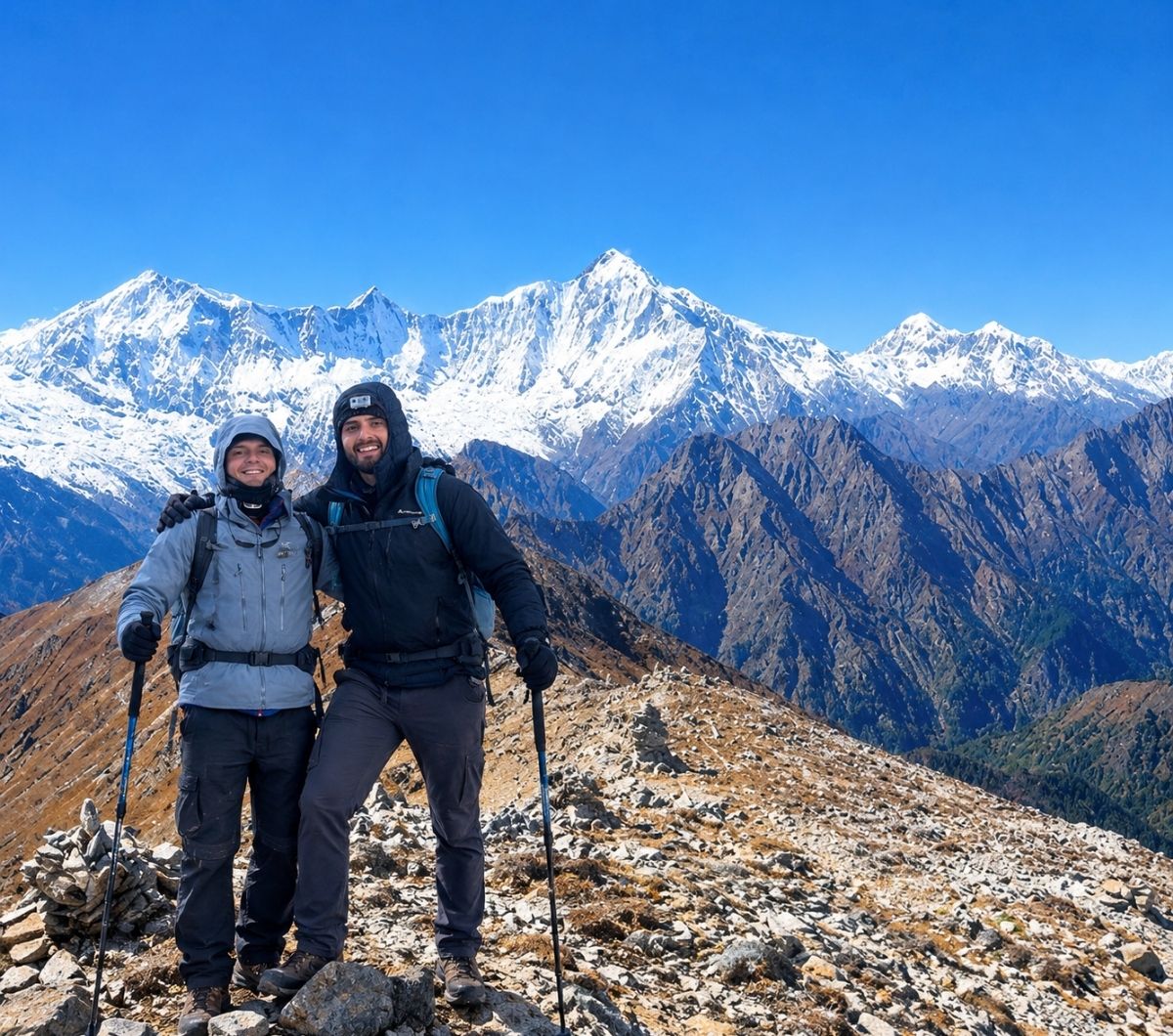
One thing you will notice while on the Nar Phu Valley Trek route is that there are very few trekkers. Unlike the Everest Base Camp Trek or the Annapurna Base Camp Trek, the Nar Phu Trek is less well-known. Its restricted status also limits the number of visitors. It is the perfect Himalayan adventure, offering a peaceful, solitary trekking experience. You will enter secluded settlements that sit beneath snow-capped peaks. You will also cross one of the highest trekking passes in the Annapurna region, the Kang La Pass (5,322 m). 

The 9 Days Nar Phu Valley Trek is a quiet alternative to busy trails in Nepal. It’s off the beaten trail, allowing you to explore one of the country’s best-preserved hidden valleys and experience the Himalayas in their purest forms. What’s more? It is suitable for trekkers of all levels with reasonable fitness and preparation. The trek delivers an unforgettable experience, where every step unfolds a new story and reveals new scenery. It is not only about reaching the journey but also about discovery. So, join the 9 Days Nar Phu Valley Trek with Outbound Treks!

What You'll Remember from 9 Days Nar Phu Valley Trek

  • Explore the twin hidden valleys of Nar and Phu in the restricted area of the Annapurna region. 
  • Walk through ancient stone villages, age-old monasteries, prayer flags, chortens, and stone cairns. 
  • Visit the historic Tashi Lhakhang Monastery and experience the Nyingma school of Tibetan Buddhism. 
  • Trek through the lush forests of pine to deep river gorges, alpine deserts, and glacial landscapes.
  • Traverse narrow canyons, towering cliffs, and centuries-old caravan routes once used for trade between Nepal and Tibet.  
  • Cross the thrilling high mountain pass of Kang La Pass (5,322 m). 
  • Enjoy stunning views of Mount Annapurna II, Annapurna IV, Gangapurna, Himlung Himal, Pisang Peak, Tilicho Peak, Chulu East, and Lamjung Himal. 
  • Get a chance to experience the authentic Himalayan hospitality and immerse yourself in the local culture.

Altitude Progress on 9 Days Nar Phu Valley Trek

Day 01: Drive from Kathmandu (1,324 m / 4,341 ft) to Besisahar (760 m / 2,493 ft) to Koto (2,600 m / 8,530 ft)

  • Altitude Gain: 1,276 m/ 4,186 ft
  • Altitude Loss: 0 m/ ft

Day 02: Trek from Koto (2,600 m / 8,530 ft) to Meta (3,560 m / 11,680 ft)

  • Altitude Gain: 960 m/ 3,150 ft
  • Altitude Loss: 0 m/ ft

Day 03: Trek from Meta (3,560 m / 11,680 ft) to Phu Village (4,080 m / 13,386 ft)

  • Altitude Gain: 520 m/ 1,706 ft
  • Altitude Loss: 0 m/ ft

Day 04: Acclimatization and exploration day at Phu Village (4,080 m / 13,386 ft)

  • Altitude Gain: 30 m/ 98 ft
  • Altitude Loss: 30 m/ 98 ft

Day 05: Trek from Phu Village (4,080 m / 13,386 ft) to Nar Phedi (3,490 m / 11,450 ft)

  • Altitude Gain: 0 m/ ft
  • Altitude Loss: 590 m/ 1,936 ft 

Day 06: Trek from Nar Phedi (3,490 m / 11,450 ft) to Nar Village (4,110 m / 13,484 ft)

  • Altitude Gain: 620 m/ 2,034 ft 
  • Altitude Loss: 0 m/ ft

Day 07: Trek from Nar Village (4,110 m / 13,484 ft) to Ngawal (3,660 m / 12,008 ft) via Kang La Pass (5,322 m / 17,460 ft)

  • Altitude Gain: 1,212 m/ 3,976 ft 
  • Altitude Loss: 1,662 m/ 5,453 ft 

Day 08: Trek from Ngawal (3,660 m / 12,008 ft) to Chame (2,670 m / 8,760 ft)

  • Altitude Gain: 0 m/ ft
  • Altitude Loss: 990 m/ 3,248 ft 

Day 09: Drive from Chame (2,670 m / 8,760 ft) to Besisahar (760 m / 2,493 ft) and drive to Kathmandu (1,324 m / 4,341 ft)

  • Altitude Gain: 564 m/ 1,850 ft 
  • Altitude Loss: 1,910 m/ 6,266 ft

9 Days Nar Phu Valley Trek Itinerary

Day 01 :

Drive from Kathmandu (1,324 m / 4,343 ft) to Besisahar (760 m / 2,493 ft) to Koto (2,600 m / 8,530 ft)

Overnight Stay

Koto

road

Drive Distance

240 km

Drive Duration

10-11 hours

Highest Altitude

2,600 m / 8,530 ft (Koto)

Meals

Breakfast, Lunch, and Dinner

Accommodation

Teahouse

Your Nar Phu Valley Trek begins on this day with an early morning drive from Kathmandu. You will leave the capital city just as it starts to wake up and follow the scenic Prithvi Highway. The initial drive is smooth on a well-paved road.

It winds alongside the Trishuli River, passing traditional villages, terraced farms, and bustling bazaars. You will get your first glimpse of Nepal’s diverse countryside and culture. After driving for some time, you will reach the gateway to the Annapurna region, Besisahar. It is a lively town from where you will begin your drive deeper into the mountains. 

The trail also becomes narrower, rugged, and more adventurous. You will drive alongside the Marsyangdi River through the lower Manang Valley. Along the way, you will pass by beautiful villages like Bhulbhule, Ngadi, Jagat, Chamje, Tal, Dharapani, and Timang.

From Dharapani, the road gradually climbs towards Koto. The village of Koto is the official entrance point to the restricted Nar Phu Valley. It sits amidst pine forests, and there is your first checkpoint. Upon entering Koto, you will check into your teahouse. You will spend the night in the beautiful mountain village.

Day 02 :

Trek from Koto (2,600 m / 8,530 ft) to Meta (3,560 m / 11,680 ft)

Trek Distance

18 km

Trek Duration

6-7 hours

Overnight Stay

Meta

Highest Altitude

3,560 m / 11,680 ft (Meta)

Meals

Breakfast, Lunch, and Dinner

Accommodation

Teahouse

Today you will start your trek to the twin Nar and Phu Valley. After breakfast at Koto, your guide will register the permits at the police checkpoint. You will leave the Annapurna Circuit Trek trail behind and enter the remote and restricted areas of the Annapurna region.

You will cross a suspension bridge over the Marsyangdi River and start trekking on a quiet path. The Nar Phu Valley Trekking route goes through dense forests of rhododendron, pine, and fir. Similarly, it goes alongside the Nar Khola. The lush forest atmosphere is cool and peaceful, and you may hear the echoes of birdsong. 

As you ascend to higher altitude, you will cross wooden bridges over streams, pass by small waterfalls, and moss-covered rocks. Trekking deeper, the forest gradually changes into rock walls and a narrow gorge carved by the Nar Khola.

Your sense of adventure starts to heighten as you cross several suspension bridges and walk on the trail where the cliff rises vertically. These showcase the valley’s raw geological beauty. Then, you will come across a small seasonal settlement of Dharmasala. The valley widens from here, and the landscape becomes more open alpine. At a distance, you will get your first glimpse of the snow-capped peaks. Finally, you will ascend to Meta, one of the first permanent settlements in the Nar Phu Valley. You will stay here for the night.

Day 03 :

Trek from Meta (3,560 m / 11,680 ft) to Phu Village (4,080 m / 13,386 ft)

Trek Distance

17 km

Trek Duration

6-7 hours

Overnight Stay

Phu Village

Highest Altitude

4,080 m / 13,386 ft (Phu Village)

Meals

Breakfast, Lunch, and Dinner

Accommodation

Teahouse

You will wake up in the fresh morning air of Meta. Today’s trek will take you deeper into the isolated valley. You will have breakfast in Meta and then start following the high trail along the hillside above the Nar Khola. The Nar Phu Valley Trekking trail takes you through the alpine landscapes, wide valleys, and rugged cliffs.

Unlike yesterday, you will not see dense forests; you will mostly trek across the trans-Himalayan terrain. The trail gradually ascends, passing by yak pastures and traditional shelters used by seasonal herders. In the alpine setting, there are very few trees blocking views, and you can see the surrounding mountains. 

Trekking along the winding alpine terrain, colorful rock formations become clearly visible. You will also cross several suspension bridges and streams. After trekking for some time, you will reach Junam Goth. It is a small grazing area, and the trail becomes narrow. There are massive cliffs surrounding the trail, and ancient chortens and mani walls start to appear.

These spiritual landmarks are also a signal that you are approaching Phu. You will pass by several stone marks and colorful prayer flags. Then you will reach Phu Village, built into a rocky hillside. There are packed stone houses with flat roofs and narrow alleyways. Phu Village is the highest permanent settlement on the trek and is an important stop for acclimatization. Thus, you will stay here for the next two nights.

Day 04 :

Acclimatization and exploration day at Phu Village (4,080 m / 13,386 ft), hike to Tashi Lhakhang Monastery (4,110 m / 113,484 ft)

Overnight Stay

Phu Village

Highest Altitude

4,110 m / 113,484 ft (Tashi Lhakhang Monastery)

Meals

Breakfast, Lunch, and Dinner

Accommodation

Teahouse

Today, you will take an acclimatization day at Phu Village. It is crucial to take a rest day to allow your body to adapt to the growing altitude. It minimizes the risk of altitude sickness. Although it is a rest day, you have to stay active and follow the mountaineering principle of “climb high, sleep low.” 

You can explore around the Phu Village after breakfast. It is isolated from the outside world and feels untouched by mass tourism. You can also hike to the Tashi Lhakhang Monastery at an altitude of 4,110 m. It sits on a hill overlooking the village. The centuries-old monastery is believed to be blessed by the Tibetan Buddhist master, Karmapa Rinpoche. Hence, the monastery is an important spiritual site for the locals. The monastery features meditation halls, murals, and prayer wheels. You can gain insight into the Buddhist practices or observe the monks performing daily rituals. 

You can also hike to the nearby ridges or viewpoints above Phu Village. The acclimatization day not only helps one adjust to the altitude but also allows one to experience the region’s culture and spirituality. You will spend the night at Phu Village.

Day 05 :

Trek from Phu Village (4,080 m / 13,386 ft) to Nar Phedi (3,490 m / 11,450 ft)

Trek Distance

12 km

Trek Duration

5-6 hours

Overnight Stay

Nar Phedi

Highest Altitude

4,080 m / 13,386 ft (Phu Village)

Meals

Breakfast, Lunch, and Dinner

Accommodation

Teahouse

On day 5, you will resume the Nar Phu Valley Trek. You will start descending through narrow stone lanes. The trail follows the Phu Khola and winds through wide alpine valleys. The raw beauty of the trans-Himalayan terrain is one of the major highlights of today’s trek. Along the way, you will get to witness eroded cliffs and glacial streams.

You will also come across several chortens and mani walls that reflect the rich Tibetan culture of the valley. Moving forward, you will cross rocky hillsides and suspension bridges that overlook deep river gorges. 

There are very few steep ascent sections today, so it is physically less demanding. The scenery is also gorgeous. If you are lucky, you may catch sightings of blue sheep grazing on pastures or Himalayan griffon vultures flying in the sky. Trekking for several hours, you will reach the junction where the trail to Nar separates from the route back to Meta.

You will make a short descent to Nar Phedi. It is a peaceful river settlement and home to the centuries-old Nar Phedi Monastery. You will rest here for the night. In the evening, you can visit the monastery or explore around the settlement.

Day 06 :

Trek from Nar Phedi (3,490 m / 11,450 ft) to Nar Village (4,110 m / 13,484 ft)

Trek Distance

6 km

Trek Duration

3-4 hours

Overnight Stay

Nar Village

Highest Altitude

4,110 m / 13,484 ft (Nar Village)

Meals

Breakfast, Lunch, and Dinner

Accommodation

Teahouse

Today will be one of the shortest trek days on the 9 Days Nar Phu Valley Trek. You will leave Nar Phedi and start ascending along a rocky zigzag above the river. As you ascend to a higher elevation, the alpine valley opens up. The landscape reveals cliffs and deep gorges.

You can see Mount Annapurna and Damodar Himal start to dominate the skyline. Below, you can see the wide views of the narrow valley. Then, you will cross a long suspension bridge over the Nar Khola. The trail from here is carved into the mountainside, and the landscape changes into the unique Himalayan landscape. 

You will get to enjoy the beautiful scenery of windswept hills, weathered rock formations, and rugged landscapes that resemble the Tibetan Plateau. The vegetation is sparse as the terrain is mostly barren. The trail is also quiet and peaceful, perfect for solitude-seeking trekkers. As you get close to Nar, you will start to see mani walls, prayer wheels, colorful flags, and whitewashed chortens.

There is a strong influence of Tibetan Buddhism. You will continue climbing until you reach the Nar Village. Compared to Phu Village, Nar is larger and more open. You can see well-preserved traditional architecture and a way of life. Nar Village will be your overnight stop for the day.

Day 07 :

Trek from Nar Village (4,110 m / 13,484 ft) to Ngawal (3,660 m / 12,008 ft) via Kang La Pass (5,322 m / 17,460 ft)

Trek Distance

22-24 km

Trek Duration

8-10 hours

Overnight Stay

Ngawal

Highest Altitude

5,322 m / 17,460 ft (Kang La Pass)

Meals

Breakfast, Lunch, and Dinner

Accommodation

Teahouse

Day 7 is the most exciting and challenging days on the Nar Phu Valley Trek itinerary. You will leave Nar Village early, before dawn. With the help of the headlamp, you will leave the quiet Nar Village in the dark. You will navigate the narrow trail with careful footing, breathing the crisp mountain air. The path is rocky, and the temperature is cold. You will carefully and steadily climb through alpine meadows and barren hillsides. The trekking trail to the upper slopes of Kang La Pass is steeper and physically challenging. It requires good endurance and determination. The thin air and cold morning weather also add to the challenge. 

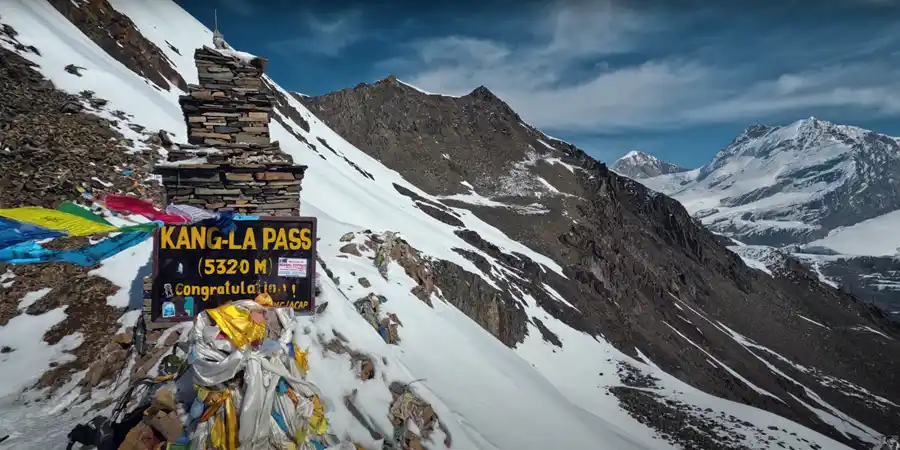
When the dawn breaks, the first ray of sunlight colors the surrounding peaks in the shades of gold and orange. Finally, when you reach the summit of the Kang La Pass, decorated with colorful prayer flags, spectacular mountain views open up before you. The sweeping view of Annapurna II, Gangapurna, Tilicho Peak, Chulu East, Lamjung Himal, and other peaks surrounds the valley. You can celebrate the achievement and take photographs before starting your descent. 

The descent trail of the Nar Phu Valley Trek from the top of the Kang La Pass is comparatively less demanding than ascending. However, you have to descend steeply on loose scree and rocky terrain. It may put strain on your knees, so trekking poles are very helpful. The altitude begins to grow lower, so breathing becomes easier. As you descend, the landscape and scenery also change. The arid, desert-like landscape gives way to alpine grasslands and green pastures. You will continue descending for a few hours and join the main Annapurna Circuit trail near Ngawal. After trekking for some time, you will reach Ngawal, where you will rest overnight.

Day 08 :

Trek from Ngawal (3,660 m / 12,008 ft) to Chame (2,670 m / 8,760 ft)

Trek Distance

17-20 km

Trek Duration

6-7 hours

Overnight Stay

Chame

Highest Altitude

3,660 m / 12,008 ft (Ngawal)

Meals

Breakfast, Lunch, and Dinner

Accommodation

Teahouse

After the challenging Kang La Pass yesterday, you will make your descent through the Manang Valley. You will rejoin the main Annapurna Circuit Trekking trail and head towards Chame. The trail from Ngawal descends through open hillsides through green forests of pine, fir, and juniper.

Along the way, you can enjoy sweeping views of Mount Annapurna II, Annapurna III, Gangapurna, Pisang Peak, and Tilicho Peak. Following the trail, you will reach the Lower Pisang. You can see traditional stone houses, prayer wheels, and fields at the settlement. 

You will continue trekking, following the Marsyangdi River. There are several suspension bridges and small settlements along the way. You will descend through pine forests and pass by the Bhratang village with beautiful apple orchards.

You may stop at the village and try fresh apples, homemade apple pie, or local apple juice. From Bhratang, you will enter the forest sections of the Annapurna Circuit. The descending trail leads to Chame, the administrative headquarters of Manang District. Arriving at Chame marks the end of the trek. 

There are comfortable teahouses, cafes, and bakeries in the town. You will rest after the long descent at the village. Additionally, there are also natural hot springs just outside Chame. You can visit the springs and relax your tired muscles after days of trekking.

Day 09 :

Drive from Chame (2,670 m / 8,760 ft) to Besisahar (760 m / 2,493 ft) to Kathmandu (1,324 m / 4,343 ft)

Overnight Stay

Kathmandu

road

Drive Distance

240-260 km

Drive Duration

10-12 hours

Highest Altitude

2,670 m / 8,760 ft (Chame)

Meals

Breakfast, Lunch, and Dinner

Today is the final day of the 9 Days Nar Phu Valley Trek. You will board your vehicle and start driving alongside the Marsyangdi River. The rugged road takes you through mountain villages, dense pine forests, and steep river gorges. It descends and once again passes by the villages of Dharapani, Tal, Chamje, Jagat, Ngadi, and Bhulbhule. You can also see the alpine scenery change into lower, lush hills. Meanwhile, the mountain views gradually disappear behind the ridgelines. 

Upon reaching Besisahar, you will start to drive on the Prithvi Highway. You will drive back to Kathmandu the same way. Along the way, you will once again get to see the familiar villages, terrace farms, roadside towns, and bazaars. As you get closer to Kathmandu, the peaceful rural landscape gives way to a vibrant city atmosphere. The Nar Phu Valley Trek concludes upon reaching the capital city. Thank you for choosing to explore the hidden valleys with Outbound Treks!

What's Included in Nar Phu Valley Trek

  • Private vehicle pick-up and drop-off service between Kathmandu Airport and your hotel.
  • Overland transportation, as mentioned in the itinerary
  • All teahouse accommodation during the trek (8 nights)
  • Standard meal (8 breakfasts, 9 lunches, and 9 dinners)
  • Seasonal fruits after dinner
  • Trek Permits (Restricted Area Permit (RAP) + Annapurna Conservation Area Entry Permit)
  • Experienced English-speaking, government-licensed trekking guide
  • Porter (1 porter for two trekkers), max weight limit is 18 kg (9 kg per trekker)
  • Full coverage of wages, meals, lodging, transport, insurance, and gear for guides and porters
  • Trek map
  • Oxygen saturation check every day
  • Water purification tablets
  • Trek completion certification
  • Trekking briefing before departure
  • First aid medical kit carried by the guide
  • Sleeping bags, down jackets, and a duffel bag (one for every two trekkers)
  • Farewell dinner at the end of the trek
  • All government, local taxes, and official expenses

What's Extra on Nar Phu Valley Trek

  • Hotel accommodation and meals in Kathmandu
  • International flight ticket
  • Nepal tourist visa fees
  • Travel insurance (Mandatory and must include high-altitude emergency and helicopter evacuation coverage)
  • Tips for guides, porters, and staff  (It is appreciated)
  • Personal expenses of all forms (alcoholic drinks, bottled water, hot shower, charging devices, snacks, desserts, laundry, Wi-Fi, phone calls, etc.)

Departure Dates

Set off on your next adventure with our scheduled departures and easy per-person pricing. Meet like-minded travelers, share the journey, and create stories worth telling. Just pick your date, and we’ll take care of the details.

9 Days

Trip Days

7 Oct, 2026

Start Wednesday

15 Oct, 2026

End Thursday

0

Pax Booked

15

Group Size

USD 769

Price

Booking Open

Status

9 Days

Trip Days

14 Oct, 2026

Start Wednesday

22 Oct, 2026

End Thursday

0

Pax Booked

15

Group Size

USD 769

Price

Booking Open

Status

9 Days

Trip Days

21 Oct, 2026

Start Wednesday

29 Oct, 2026

End Thursday

0

Pax Booked

15

Group Size

USD 769

Price

Booking Open

Status

9 Days

Trip Days

28 Oct, 2026

Start Wednesday

5 Nov, 2026

End Thursday

0

Pax Booked

15

Group Size

USD 769

Price

Booking Open

Status

Make Your Journey Private

Experience Nepal exactly the way you imagined it. Our private trips are crafted with complete flexibility with your dates, your pace, your preferences. Whether you want a slow cultural immersion, a scenic road journey.

Nar Phu Valley Trek Trip Information

Why Nar Phu Valley Trek Attracts More Experienced Trekkers Than Beginners?

The Nar Phu Valley Trek attracts more experienced trekkers than beginners because its trail is remote, physically demanding, and lacks proper trekking infrastructure. Unlike other popular trekking routes in Nepal, Nar Phu remains isolated from the outside world. Additionally, it was opened to foreign trekkers only in 2003, so the trek remains largely untouched and sees fewer visitors. Therefore, the area is largely unexplored and retains true remoteness while offering an authentic Himalayan trekking experience. 

In many popular trekking destinations of Nepal, there are well-established teahouses. However, Nar Phu is completely different. Once you leave Koto, you will trek in a restricted area through deep valleys, canyons, and gorges. Its remoteness is one of the features that attracts experienced trekkers who have already completed routes like the Everest Base Camp Trek, the Annapurna Base Camp Trek, or the Annapurna Circuit Trek. Likewise, the constantly changing trail conditions and demanding crossing of Kang La Pass also attract seasoned trekkers more than beginners. 

Compared to many commercial trekking routes in Nepal, Nar Phu Valley offers adventure over convenience. The facilities are simpler, teahouses are basic, and services like electricity and internet are limited. Hence, during the Nar Phu Trek, comfort takes a back seat. For beginners, this may be disadvantageous, but experienced trekkers see it as a raw and authentic Himalayan experience. The journey through raw wilderness also feels more like an expedition rather than a busy trekking route. It also requires mental endurance in addition to physical fitness. Seasoned trekkers are attracted to and intrigued by these challenges. 

The sense of achievement and solitude are other features that attract experienced trekkers. But it does not mean that beginners cannot do this trek. With proper preparation, determination, and the assistance of an experienced guide, first-timers can complete the trek. For seasoned trekkers, the Nar Phu Valley Trek offers a wild and authentic mountain adventure. The rewards do not come from luxury or convenience but from the journey itself.

How Nar Phu Valley Differs Geographically From the Main Annapurna Circuit?

The Nar Phu Valley Trek is geographically different from the main Annapurna Circuit Trek (ACT) in the same Annapurna region. The valley lies in a remote and restricted area to the north of the Annapurna massif. Hence, the geography is completely different from the circuit trek. The area is more isolated, with drier, harsher terrain. Trekking to the Nar Phu Valley feels like stepping into a hidden corner of the Himalayas untouched by modernization. 

One of the main geographical differences between Nar Phu Valley and the main Annapurna Circuit is the landscape itself. During the ACT journey, you will pass through lush subtropical forests and terraced farmlands, to alpine meadows, glacial terrain, and Trans-Himalayan landscapes. On the other hand, the Nar Phu Valley Trekking trail quickly moves into an arid, Trans-Himalayan environment. You will traverse deep canyons, rugged cliffs, barren hills, and glacial valleys. The scenery resembles the Tibetan Plateau compared to the green valleys found along the Annapurna Circuit Trek route. 

Another difference between the Nar Phu Valley and the Annapurna Circuit Trek is the river systems that shape them. The ACT route follows the Marsyangdi River, while the Nar Phu Valley trail follows narrow valleys carved by the Nar Khola and Phu Khola. The elevation is also a major difference between the two. You will spend more time in remote high-altitude terrain during the Nar Phu Valley Trek. Compared to this, the Annapurna Circuit elevation gain is gradual and passes through larger villages with developed infrastructure. 

The difference in geography also results in a different mountain view. During the ACT, you will witness iconic peaks such as Annapurna I, Machhapuchhre, Dhaulagiri, and Manaslu. Meanwhile, Nar Phu Valley Trek offers gorgeous views of Annapurna II, Gangapurna, Himlung Himal, Lamjung Himal, and Tilicho Peak. The Annapurna Circuit features diverse geography, but the Nar Phu Valley’s geography stands out for its trans-Himalayan landscape, isolated alpine valleys, and raw wilderness. The Nar Phu Valley Trek allows you to experience one of Nepal’s most remote areas, well-preserved cultures, and an adventure that is completely different from the Annapurna Circuit.

Kang La Pass Crossing Experience During the Nar Phu Valley Trek

If you have ever wondered what complete silence feels like, you will be able to experience this moment while crossing the Kang La Pass (5,322 m). You will wake up just before sunrise and wrap yourself in warm layers. With a headlamp switched on, you will leave the stone houses of Nar Village. The narrow trail gradually ascends over rocky and glacial terrain. The only sound that you will hear will be the crunch of boots and the occasional flutter of colorful prayer flags.  

The daylight gradually spreads across the Himalayas, and the scenery begins to transform before your eyes. It slowly reveals the hidden landscapes, and the snow-capped mountains glow in golden hues. You can see the rugged cliffs and frozen streams. Compared to many other popular Himalayan passes, Kang La feels more remote and isolated. Most often, you and your group will be the only ones trekking in complete silence, with no other groups in sight. This sense of solitude makes the crossing of the Kang La Pass different from others. It also adds to the unique experience of the 9 Days Nar Phu Valley Trek. 

The final stretch to the top of the Kang La Pass is the most challenging. More than technical climbing skills, you will need determination. The top of the pass is located at an altitude of 5,322 m. Hence, the high altitude makes each step feel physically more demanding and heavier. You will need frequent breaks, steady pacing, and determination. While it is challenging, reaching the top is highly rewarding and worth the effort. Standing at the summit of Kang La Pass, a grand panoramic mountain view unfolds before you. 

From Annapurna II to Gangapurna, Tilicho Peak, and Lamjung Himal stretch in a wide view in front of you. Below, you can see the valleys of Nar and the lush valley of Manang spread before you. Crossing the mountain pass feels like crossing a boundary between two different worlds. It is the most demanding day of the 9 Days Nar Phu Valley Trek, but also the most memorable and satisfying part. The Kang La Pass is undoubtedly the highlight of the journey.

Nar Phu Valley Vs Tsum Valley Vs Upper Mustang Treks

The Nar Phu Valley, Tsum Valley, and Upper Mustang Treks are three unique Himalayan adventures that lie in the restricted areas of Nepal. Take a look at the comparison between these three treks:

Feature Nar Phu Valley Trek Tsum Valley Trek Upper Mustang Trek
Region Annapurna region Manaslu region Mustang region
Duration 9-12 days 12-16 days 10-14 days
Highest altitude Kang La Pass (5,322 m) Mu Gompa (3,700 m) Lo La Pass (3,950 m) (may vary depending on the itinerary)
Difficulty Moderate to challenging Moderate Moderate
Crowd level Very low Low Moderate
Altitude sickness risk High Moderate Moderate
Landscape Alpine valleys, glaciers, rocky cliffs, and a high mountain pass Forests, green valleys, rivers, and waterfalls Trans-Himalayan desert terrain, canyons, colorful rock formations, cliffs, caves, and barren hills
Road accessibility Limited road access Limited road access Good road access
Accommodation Basic teahouses and lodges Basic teahouses Comfortable teahouses and lodges
Mountain views Annapurna II, Gangapurna, Tilicho Peak, Himlung Himal, Lamjung Himal  Ganesh Himal, Sringi Himal, Boudha Himal, Manaslu  Nilgiri, Dhaulagiri, Annapurna I, Mustang Himal 
Ideal for Trekkers seeking solitude, adventure, and rich cultural experience Trekkers seeking quieter trails, spirituality, and culture Trekkers looking for a unique experience, culture, and fascinated by Tibetan history

Questions Trekkers Ask About Nar Phu Valley Trek

Travel Tips, Stories, & Guides

Travel guides, trekking stories, and blogs from Outbound Treks.

Begin Your Himalayan Story

When it comes to exploring Nepal, experience matters. We will expertly guide you for a safe, comfortable, and authentic adventure. With years of local expertise, we take care of every detail, so you can focus on creating unforgettable memories. Contact us today to plan your dream adventure with Outbound Treks.