


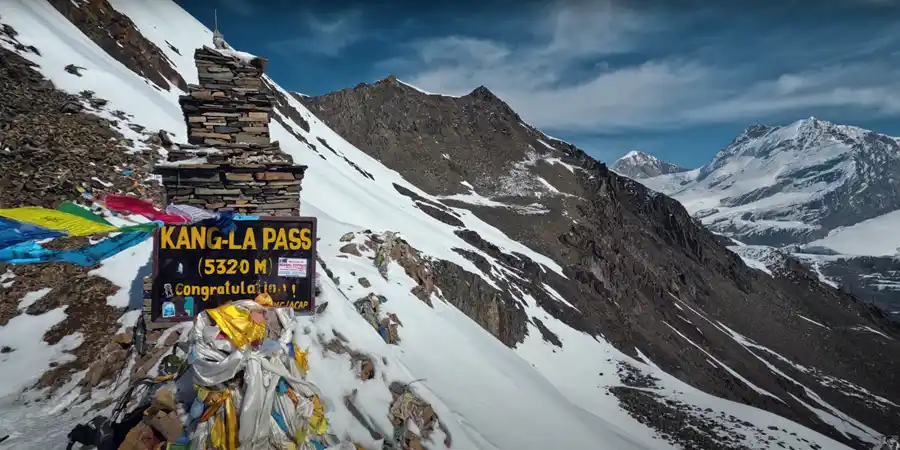
October is the ideal month for the Nar Phu Valley trek while April is not far behind. In general, one should target late March to mid-May and late September to mid-November. During these months, the skies are clear, the trail is dry, and Kang La Pass is usually open.
Timing is especially important when considering this trek. Indeed, it is the only trek where timing makes such a difference. It all depends on the weather conditions during which one pass, Kang La Pass located at 5,322 m, will either make or break the trek. Both rain and snow may close it and the road leading to the starting point.
This guide provides detailed information about each season and month from the perspective of the guide companies conducting this trek. You will find information about permit costs per season, the 2026 rule change for solo trekkers, and the best month choice for each type of trekker.
Why Timing Matters So Much on Nar Phu Valley Trek
Most people think of season as a weather question. On Nar Phu, it is really about two days of your trip.
Day 1: the drive in. Our 9-day Nar Phu Valley Trek starts with a 10 to 11 hour drive from Kathmandu to Koto. The last part, from Besisahar up the Marsyangdi valley, is a rough mountain road. In the monsoon, landslides can block it for hours or days.
Day 7: the Kang La crossing: Here we go on the day that matters most. Start early from Nar village, make the climb up to 5,322 meters altitude, and descend steeply to Ngawal. The total time would take 8-10 hours. If there were fresh snow covering the pass, it would not be safe to pass.
In case of a typical schedule of 9 days’ trek with no extra time, please ask to include an extra day in case if you are walking through a shoulder month. Your guide will have extra time for waiting till the conditions get better instead of forcing the pass.
The only good thing is that Nar and Phu valleys lie beyond the Annapurna massif in the rain shadow zone. Most of the rains coming by monsoon are caught at the mountain ridges before they fall into the valley.
Month-by-Month Breakdown for Nar Phu Valley Trek & Season Guide
| Month | Verdict | Kang La Pass | Why |
|---|---|---|---|
| January | Not advised | Often closed by snow | Deep cold, some lodges shut |
| February | Not advised | Often closed by snow | Still winter at the pass |
| March | Late March only | Early March often snowed in | Spring arrives late up high |
| April | Best | Usually open | Stable weather, warm days |
| May | Good | Open | Warm, cloud builds in the afternoon |
| June | Possible, with care | Open | Monsoon starts, road risk |
| July | Possible, with care | Open, often cloudy | Peak monsoon on the drive in |
| August | Possible, with care | Open, often cloudy | Green valleys, landslide risk below |
| September | Good from mid-month | Open | Monsoon clears, skies sharpen |
| October | Best | Open | Clearest, driest, most reliable |
| November | Good | Open, snow risk late in month | Quiet trails, cold nights |
| December | Not advised | Often closed by snow | Winter sets in |
Best time for the Nar Phu Valley Trek is October. Making right month choice matters, as trail conditions, views, and overall experience depend on it.
Spring (March to May): Flowers, Long Days, and an Open Pass
Spring is the second-best season to visit Nar Phu. The days become warm; village inhabitants who left for cities return and a forest of rhododendrons flowers between Koto and Meta. Night temperatures in Nar Phu remain low, so warm clothes are a must!
Early March
In terms of calendar, March is spring. But March in Kang La is generally a winter month. There may still be snow in the pass in early March. Guides on this route have had to turn back at Nar village because the pass was blocked.
If you must travel in early March, make provision for a possible turnaround and extra day. Otherwise, go in the second part of the month.
Late March to April
Conditions become favorable from late March onwards. By the month of April, the pass is accessible enough to walk through. It is sunny during mornings, and the sight of Annapurna II, Gangapurna and Lamjung Himal can be clearly seen.
In April, the valley comes alive with life once again. Families who have been staying in Kathmandu or Pokhara during winter return home, and the tea houses reopen for business.
May
May is the warmest month of the spring season. Walking is easy, even at heights. The problem with May is the clouds. As the monsoon approaches, clouds form from midday onwards and may obscure the mountains.
It is best to begin early each day for clear views in the mornings. The rains may come in late May on the way in, so you need a raincoat.
Autumn (September to November)
Autumn would be the perfect season for taking on the Nar Phu Valley trekking trail. This is because after the rainy season, the air becomes clear. Afterwards come many weeks of dry paths and clear weather, as well as the best mountain scenery of the year.
September
September early may seem like monsoon time. There will be clouds in the sky and possibly even road repairs going on along the route to Koto due to rain damages. Towards the middle part of the month, the climate becomes stable.
A late September trip is ideal for you if you prefer bright skies and do not wish to join the throng in October.
October
Of course, the optimal month for your journey will be October. The sky at that time is deep blue; the paths are dry, and the pass is at its safest. In case this is your first high pass, then October is your lucky month.
October is the season of two largest festivals in Nepal – Dashain and Tihar, and their dates vary from late September to November. At this period, the city becomes very crowded, and some offices are closed, so make sure to organize your trekking well beforehand.
You will also have the chance to see climbers in the valley because autumn is the season when climbing teams start to climb the peak of Himlung Himal, which is accessible from Phu.
Will you have to deal with too much crowd there? Not really, because Nar Phu Valley is a restricted zone and only 1,850 foreign tourists came there in the whole 2025 year.
November
The month of November maintains the clear skies and becomes even quieter. The visibility is one of the best during the year. The downside to it is the cold weather. Temperatures drop below freezing point at Nar and Phu.
The early days of November are great. By the end of the month, the first snowfall can come to the pass, so contact us before you make your plans for late November.
Monsoon (June to August)
Of course, but only with caution. Nar Phu is one of those rare trekking locations in Nepal that can actually be done during the summer season due to the existence of the rain-shadow effect.
However, the difficulty is how to reach it. The journey from Besisahar up to Koto is highly landslide-prone during the monsoon season. There is also the gorge located at Koto and Meta which could possibly suffer rockfall following rain.
Monsoon suits you if:
- Summer is the only time you can travel
- You have spare days in your plan
- You love green valleys, wildflowers and empty trails
Skip the monsoon if:
- You are on a tight schedule
- Clear mountain views are your main goal
- This is your first trek in Nepal
If you go in summer, bring good rain gear and boots with strong grip. Talk to us first about building in buffer days.
Winter (December to February)
Nar Phu Valley winters are gorgeous and very tough. Snow blankets the tracks high up, and the villages become deserted. Skies may remain clear but it can get brutally cold, particularly at night.
The Kang La Pass is normally covered up with snow during winter. Many families move to the valleys below and several tea houses close down till spring arrives.
Winter is not the season we would generally recommend to the trekkers. However, if you are an experienced trekker and properly equipped, please feel free to write to us before making any bookings. We will give you an honest evaluation about the conditions prevailing that year.
Nar Phu Weather and Temperature by Season
Nar and Phu villages sit at about 4,100 m. That is around 600 m higher than Manang, the nearest town with long-term weather records. Expect Nar and Phu to be a few degrees colder than the figures below.
| Season | Manang daytime (approx.) | Manang night (approx.) | What it means at Nar and Phu |
|---|---|---|---|
| Spring (Mar to May) | Cool to mild | Below freezing early, near zero by May | Cold nights, comfortable days |
| Monsoon (Jun to Aug) | Mild, around 15°C | Around 5 to 7°C | Mildest nights of the year |
| Autumn (Sep to Nov) | Mild to cool | Dropping below freezing by November | Crisp days, freezing nights |
| Winter (Dec to Feb) | Around freezing | Around -12°C, colder in cold spells | Severe cold, snow on high ground |
What strikes the traveler most is the change between day and night. While walking wearing only a T-shirt at lunchtime, later you may require wearing a down jacket at 5pm. Dress accordingly, take your warm clothes in your daypack and not at the bottom of your pack.
In our pack, we provide you with a down jacket and a sleeping bag so you don’t have to purchase heavy clothes for just one adventure.
Crowds, Teahouses and Cost of Nar Phu Valley Trek Through the Year
How Busy Nar Phu Really Gets
Nar Phu receives a much smaller number of trekkers compared to the well-known routes in Nepal. According to estimates, only 1,850 foreign trekkers are registered in 2025. They arrive mainly in October, November, and April.
Nevertheless, even then, you will find yourself in company with just a few groups rather than hundreds of them. If you choose monsoon and winter periods, you might travel alone all the way through.
When Teahouses Near Nar Phu Close
Teahouses in Nar Phu are simple, family-run places. In the coldest months, some close while their owners move to lower towns. In spring and autumn, almost all are open. Your guide will know which ones are running and book beds ahead.
Permit Cost of Nar Phu by Season
Nar Phu needs two permits: the Restricted Area Permit and the Annapurna Conservation Area Permit. The restricted permit price changes with the season.
| Period | Restricted Area Permit | Extra days |
|---|---|---|
| September to November | USD 100 per person for the first week | USD 15 per day |
| December to August | USD 75 per person for the first week | USD 15 per day |
The Annapurna Conservation Area Permit is a separate fee and costs the same all year. Both permits are included in our Nar Phu package, and we arrange them for you.
Solo Trekkers on Nar Phy Valley Trek: What the 2026 Rule Change Means for Your Dates
Up until March 2026, it was impossible to obtain a Nar Phu permit independently. Two or more foreigners were needed for each permit by the Nepalese authorities. Travelers alone would have to seek a companion or book themselves into a group date.
Effective from 22 March 2026, the Department of Immigration of Nepal abolished this restriction. The traveler alone can now apply for the Restricted Area Permit under his/her name. Nevertheless, you still need to hire an officially authorized guide and trekking company.
As for the timing, this makes a huge difference since there is no need to wait for a compatible group according to your schedule anymore. You are free to choose the best time for yourself. Our Nar Phu trek takes place in groups of 1 to 15 people.
Which month should you choose for a trek to Nar Phu?
- First high pass: October. The best odds of a dry, open Kang La.
- Photographer: Late October or early November for sharp air, or April for flowers against snow peaks.
- Solitude seeker: Early November or late September. Clear skies, fewer groups.
- Culture lover: April or May, when families are back in the villages and daily life is busiest.
- Only free in summer: July or August, with spare days and good rain gear.
- Only free in winter: Choose a different trek, or talk to us first about conditions that year.
Tips for Trekking Nar Phu in Any Season
- Arrive a day early. Land in Kathmandu at least one day before Day 1. The drive to Koto leaves early and is long.
- Add a spare day in shoulder months. Early spring and late autumn are when weather most often delays Kang La.
- Use the Phu rest day. Day 4 is for acclimatization. Take the short hike to Tashi Lhakhang Monastery and keep moving gently.
- Start the pass in the dark. Kang La day begins before dawn, so pack a headlamp and keep it charged.
- Bring trekking poles. The descent from Kang La is steep, loose scree. Poles save your knees.
- Pack for cold nights in every season. Even in summer, nights up high are cool.
- Watch your oxygen levels. Your guide checks your oxygen saturation every day. Tell them early if you feel unwell.
FAQs About Best Time For Nar Phu Valley Trej
Which month is ideal for Nar Phu Valley trek?
Can I do the Nar Phu trek in monsoon?
Is the Kang La Pass open in winter?
Is early March too early for Nar Phu?
Does the cost of the permit vary according to the season?
Is it possible to make the Nar Phu trek solo in 2026?
How cold does it get at Nar and Phu?
Is 9 days enough for Nar Phu in peak season?