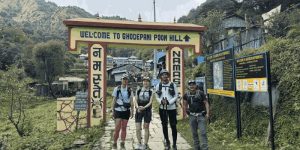



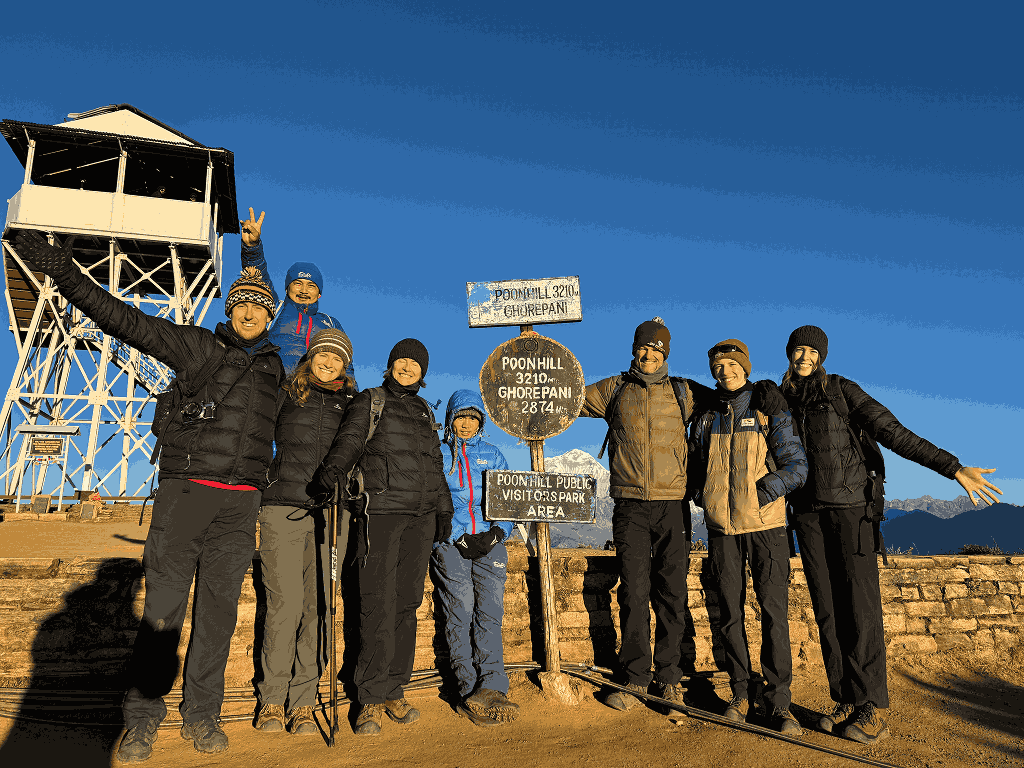
Sure, a June trek to Ghorepani and Poon Hill is possible and usually quite enjoyable. Teahouses are open, the trails are virtually deserted, and the forest is lush green. However, there is a problem, namely the rain which mainly comes during the day and night as well as clouds which sometimes obscure the sunrise peaks. It is recommended to start your trek in the first half of June, and plan for two sunrises instead of one.
Type “Poon Hill in June,” and you will see the same phrase repeated again and again. Monsoon. Mud. Leeches. Avoid it.
But then, you have to check the calendar and find out that June is your only chance.
Who then is right? The truth lies somewhere in the middle. June does indeed bring rain and clouds, but much of the frightening information is just blindly copied without any verification.
This guide tells you what kind of effect June has on each of the days of the trek. It will show you which week to choose, how the guide behaves in case of bad weather, and why the route we offer gives you a second chance.
Our 5-day Ghorepani Poon Hill Trek runs right through June with a licensed guide, porter and permit included. Talk to our team today, and we’ll help you pick the best dates in your window.

Why Most Guides Say Suggest Skipping June For Ghorepani Poonhill Trek?
Poon Hill guides will generally tell you to stay away from June through August. Some reasons are legitimate while others do not apply to a trek as high as 3,210 m.
This is what is true. Clouds usually shroud the views of Annapurna and Dhaulagiri range after mid-morning.
Steps on the route get slippery. Leeches become active in wet lower forest while rain may cause mini-landslides along dusty routes.

This is what is overstated. Some sites mention avalanches but there is no chance of this happening because Poon Hill lies much below the avalanche-prone slopes. Also, rain does not fall throughout the day because the monsoon in this area typically arrives in the afternoon and clears by nightfall.
Teahouses do not shut down. Ghorepani, Tadapani and Chhomrong all have kitchens operating through the monsoon season. Hence, the question here is not whether one should go in June but rather how to plan a trip to minimize the impact of the rain.
Pick Your Week, Not Just Your Month
June is not one season. It is actually three different weeks depending on the date of the monsoon.
The average date of the monsoon in Nepal is June 13. But it came as early as May 29, two weeks early, in 2025. In 2026, it was two weeks late, coming in June 19, and even then it only touched a few areas in the Gandaki Province, where Poon Hill is situated.
This three-week difference makes all the difference. This is how the month is usually divided up.
| June window | Usual weather | Sunrise odds | Trail crowds |
|---|---|---|---|
| 1 to 10 June | Pre-monsoon, hot low down, afternoon storms after 2 pm | Fair, some haze | Light |
| 11 to 20 June | Monsoon arriving, showers most afternoons | Mixed, sharp on clear mornings | Very light |
| 21 to 30 June | Full monsoon, rain most days and nights | Low, but not zero | Almost empty |
If you can choose, pick the first ten days. If your dates are fixed later, don’t cancel. Just plan your days around the morning, as the next section shows. The june month weather complexity not only applies for Ghorepani Poonhill Trail, famous trek like ABC in june is also equally hard.
Ghorepani Poon Hill Trek in June, Day by Day on Our Route
Every guide gives you a list of June problems. But what you really want to know is how June changes each day you walk. So here is our 5-day route, one day at a time.
Day 1: Pokhara to Ulleri, Up the Stone Steps
From Pokhara to Tikhedhunga you drive for about two hours and reach Ulleri at 2,050 m elevation. This is the famous staircase of more than 3,000 hand-made stone steps, and it takes about three to four hours.
The following tip, which I learned back in June, will surprise most of you. Our path will follow those steps in an upward direction rather than a downward one, and during the rainy season that becomes crucial. As going up the slippery stones is difficult, but going down is when people trip.
The low forest, which is under 2,500 m, is also the habitat for the leeches. Tuck your trousers into your socks and have some salt in your pocket. A cup of nice warm masala tea on the porch of a lodge by the end of the day will be very well-deserved.
Day 2: Ulleri to Ghorepani, Through the Wet Forest
The total distance to be covered today is 11 km to the village of Ghorepani at an elevation of 2,860 meters above sea level in 4 to 5 hours. The route includes trekking through forests of rhododendron and oak trees which are covered with moss and are wet and noisy because of the presence of numerous streams.
Leave for the trek early morning. Typically, the June weather implies that before noon there will be no rain, whereas during the second part of the day, one can expect rain showers. So if you arrive to Ghorepani in the early afternoon, you can admire the rain from the warm dining room.
Ghorepani is located above the leech area, so you can feel somewhat relaxed. You can hang your wet socks next to the fireplace of the dining room. Most of the lodges would not object to that.
Dinner tonight is the dal bhat next to the fireplace of the lodge.
Day 3: Poon Hill Sunrise, Then On to Tadapani
Alarm rings around 4:30 am. The trek to Poon Hill (altitude 3,210 m) will take around 45 minutes to 1 hour using flashlight through rocky staircase in the forest.
Before starting out, the guide observes the skies. Presence of stars signifies that its time to start.
Continuous rainfall indicates that one needs to wait from 20 to 30 minutes because overnight rain clears just around dawn. Although Poon Hill might be surrounded with fog, one still gets to enjoy hot tea and fluttering of prayer flags amidst the mist.
After that, one walks for 5 to 6 hours to reach Tadapani (altitude 2,630 m) crossing Deurali ridge. This is where the important point for June comes in. There is also a sunrise view of Annapurna South and Machhapuchhre at Tadapani.
Day 4: Tadapani to Jhinu Danda and the Hot Springs
Wake up early and go to the window. If Poon Hill had been cloudy, then this is an alternate sunrise for you, and the mornings that follow rainfall tend to be extremely clear.
Next, you head down to Jhinu Danda at 1,780 m via Chhomrong, the largest Gurung settlement in the region. The descent is entirely downhill on stony steps, so move carefully using your trekking poles. Below 2,500 m, leeches begin reappearing again, so watch your ankles at each tea stop.
Your payoff will be waiting by the river. A short hike down from Jhinu Danda will take you to the hot springs near the Modi Khola River. This comes as a relief to four days of wet weather, although the guide will check the levels in the river first since floods in June fill up the pools.
Day 5: Back to Pokhara
After walking for 2 to 3 hours, you can reach Ghandruk Phedi and then go back to Pokhara by car in 2 hours. Since this road is not entirely motorable and can be dusty in heavy rain, it might take some time to travel.
That is the reason why it is always recommended to have an extra day in Pokhara following a June trek. It won’t cost you much and will relieve you of any pressure.
How To Deal With Extreme Weather & Rain During Ghorepani Ponhill Trek?
What if it rains for two consecutive days? This is the issue that every June hiker worries about, and it is where the good guide proves their worth.
Firstly, the time of the walk gets adjusted. In case of rain, the guide starts early so as to get to the other lodge before the rainfall becomes too heavy. Most June days see a period where there is no rain in the morning, and the schedule is based on that.
Secondly, the route can change. In case the road to Tadapani looks bad, your guide will take you down to Chuile instead.
Third, no one heads into harm’s way just to keep time. Your safety always comes first, ahead of any itinerary.
In case there is water in the river or landslides on the road, we will wait in a comfortable and dry lodge with some tea and a deck of cards. This is what the extra day in Pokhara allows us to do.
Hari Gurung, our founder, began his work as a porter in these regions at the age of 17 and has been guiding for over 15 years after that. The company, Outbound Treks, has been running treks in Nepal for over 15 years, but June is when it really counts.
Ghorepani Poon Hill Trek in June vs October and April
Still not sure June is right for you? Here is how it compares with the two classic seasons.
| What you get | June | October | April |
|---|---|---|---|
| Mountain views | Unreliable, best at dawn | Best of the year | Good, some haze |
| Rain | Frequent, mostly afternoon and night | Rare | Short showers |
| Crowds at Poon Hill sunrise | A handful of people | Often hundreds | Busy |
| Forest | Deep green, mossy, waterfalls | Dry and golden | Rhododendrons in flower |
| Daytime temperature on the trail | Roughly 9 to 24°C | Cool and crisp | Mild |
| Lodge rooms | Easy to find | Book ahead | Book ahead |
June is ideal for those with set holiday dates, those who detest being among the masses, and those who prefer a peaceful walk to an awesome view. In late June, you can catch glimpses of families planting rice on their terraces, singing while doing so.
If a single picture of a perfect sunrise is what matters to you, then June is not the right choice since there are better times for that. June is not a good time if rhododendrons are what you seek, because they bloom before that month ends.
What to Pack for Ghorepani Poon Hill Trek in June
June packing is about staying dry, not staying warm. Nights stay above freezing, and our package includes a sleeping bag and down jacket if you need them.
- A proper rain jacket, not a thin poncho that blows open on the ridge
- A pack cover, plus dry bags for clothes, phone and passport
- Two pairs of socks for each walking day, because wet socks never dry overnight
- Quick-dry shirts and trousers, never cotton
- Long socks or light gaiters to keep leeches out
- A small bag of salt
- Trekking poles for the wet stone steps
- Light sandals, so your boots can dry in the evening
- A power bank, since lodge charging costs extra
- Sunscreen, because the sun burns hard between showers
Pack light, though. A porter carries your main bag, so your daypack only needs rain gear, water, snacks and your camera.
Cost, Permits and the Guide Rule in June Ghorepani Ponhill Trek
Our 5-day Ghorepani Poon Hill Trek costs from USD 345 to 410 per person, depending on your group size.
| Group size | Price per person |
|---|---|
| 1 to 2 people | USD 410 |
| 3 to 10 people | USD 400 |
| 11 to 15 people | USD 360 |
| 16 to 20 people | USD 345 |
This price includes transport to and from Pokhara, four nights in teahouses, meals during the trekking period, an English-speaking licensed guide, one porter per two trekkers, and the conservation permit. Besides, your guide monitors the oxygen levels and has the first aid kit with him/her.
The Annapurna Conservation Area Permit, or ACAP, costs NPR 3,000 for foreigners and NPR 1,000 for SAARC nationals and children under 10 years trek for free. You can get your permit in Kathmandu or Pokhara as there are no permits available on the trail.
But what about guides? Some sites indicate that you don’t need a guide to go trekking.
However, according to the recent rules of Nepal introduced since April 2023, the foreigners should trek with the licensed guide in the Annapurna Conservation Area regardless of control points, despite the fact that there is still TIMS card on paper, but now the ACAP one prevails.
Other Trek Options If June Ghorepani Poon Hill Still Feels Too Rainy
Maybe the rain still worries you. That’s fair, and you have a few other options from Pokhara.
Upper Mustang Trek: The Upper Mustang Trek is the driest choice. It sits in a rain shadow behind the Annapurna range, so it stays much drier through the monsoon than Poon Hill does.
Mardi Himal Trek: The Mardi Himal Trek climbs higher in 6 days, with close views of Machhapuchhre. It suits beginners too, as our Mardi Himal beginner’s guide explains, though its open ridge can be very cloudy in June.
FAQs About Ghorepani Poon Hill in June
Are the teahouses open in June?
How many hours does it rain each day?
Can beginners do the Poon Hill trek in June?
Will I see the mountains from Poon Hill in June?
Do I need a guide for Poon Hill in June?