


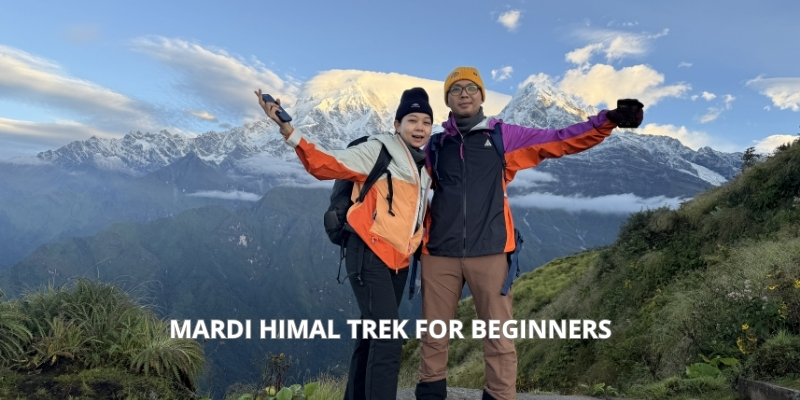
The beginner trekkers should definitely go for the Mardi Himal Trek since you’ll be at a 4,200 m viewpoint in four and a half days of trekking without any climbs. You’ll never reach 3,580 m, and each stop will have a teahouse where you will spend the night. The trek starts and finishes by road in the vicinity of Pokhara, therefore, there will be no need for flights into the mountains. Anyone who can hike for five to six hours per day should do this trip.
And the most common question among beginner trekkers is whether you can do a Himalayan trek if you have zero experience. Yes, you can trek the Mardi Himal Trek as long as you know the difficult parts of this route and are ready for it.
Here I will present all the facts about the Mardi Himal Trek for beginners. In the guide, you will find the schedule of altitudes, difficult parts, the viewpoint or Base Camp dilemma, permits, costs, and the training plan. Have any questions about your dates or physical condition? Contact us right now and receive a free itinerary.
Here are the key facts for our 6-day route, so you can check them at a glance before reading further.
| Detail | Mardi Himal Trek (Outbound Treks, 6 days) |
| Start and end | Kathmandu to Pokhara by road; trek starts at Dhampus, ends at Siding |
| Walking days | 4.5 days (Day 2 to Day 6) |
| Total trail distance | About 41 to 45 km |
| Walking time per day | 3 to 8 hours |
| Highest point | Mardi Himal Base Camp, 4,500 m (Upper Viewpoint 4,200 m) |
| Highest overnight | High Camp, 3,580 m |
| Grade | Moderate, no technical skills needed |
| Accommodation | Teahouses (family-run lodges) |
| Permit | ACAP, NPR 3,000 for foreigners |
| Guide | Licensed guide required for foreign trekkers |
| Best seasons | March to May, September to November |
| Price | From USD 380 per person |
Why the Mardi Himal Trek Suits Beginners
Many treks in Nepal call themselves beginner-friendly. Mardi Himal has five concrete reasons to back that claim.
1. It Is Short
You spend 4.5 days walking, during which you cover approximately 41 to 45 kilometers. You could compare this with an Everest Base Camp trek which takes anywhere between 12 to 14 days. With a brief trek, you get the chance to see how well you can cope with the altitude conditions.
2. Low Risk of Altitude
Your maximum altitude is 3,580 m at High Camp. The next day you climb to the view point of 4,200 m and spend the night at 2,970 m, which is Low Camp. The main problem with altitude sickness is related to sleeping at a high altitude for a few days in a row.
3. Easy Teahouse Accessibility
Every night’s halt has family-owned hostels with beds, blankets, and cooked food. You have only to carry your day pack, and you don’t require a tent, stove, or any camping skills.
4. Road Access at Both Ends
The trek begins from Dhampus, which is about 2 hours away by road from Pokhara, while the ending point is Siding, which takes about 2 to 3 hours’ journey from Pokhara. There are no internal mountain flights available, which means there will be no weather issues.
5. Quieter Trail
For the rest of the trek, trekkers move on to Annapurna Base Camp while the route for Mardi Himal branches out independently from Pritam Deurali. This means that the trail is relatively quiet, which allows trekkers to move at their own speed. It is relatively new since it was opened in 2012.
Mardi Himal Itinerary for Beginners, Day by Day Guide
This is our 6-day route. Use it to see exactly where each overnight stop sits and how long each day takes.
| Day | Route | Overnight altitude | Distance | Time |
| 1 | Drive Kathmandu to Pokhara | 820 m | 200 km by road | 6 to 7 hrs drive |
| 2 | Drive Pokhara to Dhampus (1,650 m), trek to Pritam Deurali | 2,100 m | 25 km drive, 5 km trek | 2 hrs drive, 3 hrs walk |
| 3 | Pritam Deurali to Forest Camp (Kokar) | 2,550 m | 6 km | 4 to 5 hrs |
| 4 | Forest Camp to High Camp via Low Camp and Badal Danda | 3,580 m | 8 km | 6 to 7 hrs |
| 5 | High Camp to Upper Viewpoint (4,200 m) and Base Camp (4,500 m), down to Low Camp | 2,970 m | 12 km | 6 to 8 hrs |
| 6 | Low Camp to Siding (1,750 m), drive to Pokhara | 820 m | 8 km trek, 60 km drive | 4 to 5 hrs walk, 2 to 3 hrs drive |
Two things stand out for a beginner. Day 4 is the longest climb, and Day 5 is the longest day. The rest of the walking days are 3 to 5 hours, which leaves plenty of time to rest in the afternoon.
How Difficult Is the Mardi Himal Trek for Beginners?
Mardi Himal is graded moderate. The trail is short, but it is steep, and that is what catches first-timers off guard. Here is where the effort actually goes.
Altitude Gain Per Day During Mardi Himal Trek
| Day | From | To | Gain on foot | Loss on foot |
| 2 | Dhampus 1,650 m | Pritam Deurali 2,100 m | +450 m | 0 m |
| 3 | Pritam Deurali 2,100 m | Forest Camp 2,550 m | +450 m | 0 m |
| 4 | Forest Camp 2,550 m | High Camp 3,580 m | +1,030 m | 0 m |
| 5 | High Camp 3,580 m | Base Camp 4,500 m, then Low Camp 2,970 m | +920 m | -1,530 m |
| 6 | Low Camp 2,970 m | Siding 1,750 m | 0 m | -1,220 m |
In short, you gain almost 2,000 m in the three walking days from Dhampus to High Camp. That is fast, so pacing matters more here than on a longer trek.
The Three Hardest Sections of Mardi Himal Trek
Day 4, Forest Camp to High Camp: You ascend more than 1,000 m within 6-7 hours, first going up through the forest, then on open ridge above Low Camp. From 3,000 m altitude all novices will feel lack of air, so move slower and take short stops.
Day 5, the day of summit: You start from High Camp around 4 am with headlamp in the cold weather along the narrow ridge trail. Viewpoint takes 2-3 hours and the path to Base Camp is even narrower with loose rocks.
Days 5 and 6, the descent: You descend 1,530 m on Day 5 and 1,220 m on Day 6. Steep and long descents put great pressure on your knees, and poles become essential.
Mardi Himal Viewpoint vs Base Camp: Which Should a Beginner Choose?
On summit morning you choose between the Upper Viewpoint and Base Camp. The two are often confused, so here is the difference.
| Upper Viewpoint | Mardi Himal Base Camp | |
| Altitude | 4,200 m | 4,500 m |
| Time from High Camp | 2 to 3 hrs one way | 4 to 5 hrs one way |
| Trail | Ridge path, steady climb | Narrower, rocky, loose stones |
| View | Widest view of Machhapuchhre, Annapurna South, Hiunchuli and the Annapurna range | Closer to the south face of Machhapuchhre and Mardi Himal; side ridges block part of the wider view |
| Best for | All beginners | Fit trekkers with no altitude symptoms |
Our advice is simple. Continue to Base Camp only if you slept well, have no headache, and reached the viewpoint feeling strong. If you feel unwell, or clouds are rolling in, turn back at the viewpoint, because most photographers consider it the better view anyway.
How Should Beginners Deal With Altitude Sickness on Mardi Himal Trek?
Altitude sickness can start above about 2,500 to 3,000 m, and this trek takes you well past that. Many beginners assume a short trek cannot cause problems. It can, mainly because you gain height quickly.
Signs to Watch For To Prevent Altitude Sickness Risk
These can include headaches, fatigue, poor sleeping habits, and mild loss of appetite. Danger signals include worsening headache, nausea, dizziness, confusion, or difficulty breathing when lying down. Should you encounter any danger signal, immediately stop climbing and inform your guide.
How to Lower the Risk of Altitude Sickness
Move at a pace where you can talk. Drink between 3 and 4 liters of water in one day. Avoid alcohol on the path, and make sure that you eat properly even when not feeling hungry. Consult your doctor before leaving about taking Diamox (acetazolamide).
How to Deal With Altitude Sickeness
First and foremost, you have to go lower, and most of the time, even mild cases recover just fine after one night at Low Camp. Your guides will take your blood oxygen level every day using a pulse oximeter to prevent emergencies. Helicopters can land at High Camp and Base Camp in an emergency case, but not at Forest Camp and Low Camp, so your travel insurance should cover at least 4,500 m.
Mardi Himal vs Other Beginner Treks in Nepal
If you are choosing your first trek, this table compares Mardi Himal with the three treks beginners most often ask us about, using our own package details.
| Trek | Days (from Kathmandu) | Highest point | Highest night | Grade | From (USD) |
| Ghorepani Poon Hill | 5 | 3,210 m | approx. 2,860 m | Easy to moderate | 410 |
| Mardi Himal | 6 | 4,500 m (viewpoint 4,200 m) | 3,580 m | Moderate | 380 |
| Short Annapurna Base Camp | 7 | 4,130 m | 4,130 m | Moderate | 685 |
| Everest Base Camp (12 days) | 12 | 5,545 m | approx. 5,160 m | Moderate to challenging | 1,235 |
Poon Hill is easier, but it stays lower and the big peaks stay further away. Annapurna Base Camp takes you inside the sanctuary, but you sleep at 4,130 m. Mardi Himal sits in between: you go above 4,000 m and see the Annapurna range up close, while your highest night stays at 3,580 m.
Best Time for a Beginner to Do the Mardi Himal Trek
The ridge above Low Camp is open to wind, rain, and snow, with little shelter between camps. That makes the season choice more important here than on forest treks.
| Season | Months | Conditions | For beginners |
| Autumn | September to November | Clearest skies, dry trails, comfortable days, busiest teahouses in October and November | Best choice |
| Spring | March to May Mardi Himal Trek | Rhododendrons in bloom below Low Camp, milder nights, more afternoon cloud | Very good |
| Winter | December to February | Very cold nights, quiet trails, snow possible above High Camp | Only with good gear and a flexible plan |
| Monsoon | June to August | Rain, slippery mud, leeches, fog hiding the peaks | Not recommended |
In every season, mornings are clearer than afternoons, because cloud usually builds after midday. That is why the climb to the viewpoint starts before sunrise. If you trek in October or November, book early, because High Camp has a limited number of rooms.
Permits, Guide Rule and Cost of the Mardi Himal Trek
Permits Required For Mardi Himal Trek
You need one permit, the Annapurna Conservation Area Permit (ACAP). It costs NPR 3,000 for foreign nationals and NPR 1,000 for SAARC nationals. It is checked at Pothana on the first trekking day. Some older blogs also list a TIMS card, but it is not required for this route under current rules.
Licensed Guide Requirement For Mardi Himal Trek
Since April 2023, foreign trekkers in Nepal’s national parks and conservation areas must trek with a licensed guide. This means solo, unguided trekking on Mardi Himal is no longer an option. For a beginner, a guide also handles pace, rooms, meals, and altitude checks.
Mardi Himal Trek Price
| Group size | Price per person |
| 1 to 4 people | USD 380 |
| 5 to 9 people | USD 360 |
| 10 to 14 people | USD 350 |
| 15 to 20 people | USD 300 |
The price includes airport pickup, the drive from Kathmandu and back to Pokhara, five teahouse nights, all trail meals, the ACAP permit, a licensed English-speaking guide, one porter for every two trekkers (9 kg per trekker), a loaned sleeping bag and down jacket, water purification tablets, a first aid kit, and daily oxygen checks.
Costs That Are Not Included in the Mardi Himal Trek
You pay separately for your Pokhara hotel, the Nepal visa, travel insurance, and tips for your guide and porter. On the trail, hot showers, phone charging, Wi-Fi, bottled drinks, and snacks are extra. There are no ATMs after Pokhara, so carry enough Nepali rupees in cash for these.
Teahouses, Food and Daily Life on the Mardi Himal Trail
Knowing the basics of teahouse life removes a lot of first-trek worry. Here is what to expect.
Rooms
Rooms are simple, usually with two single beds, a mattress, a pillow, and blankets. Most toilets are shared, and at the higher camps they may be outside the main building. Rooms have no heating, and High Camp drops to about 0°C to -5°C after dark, so a warm sleeping bag matters.
Food
The menu includes a dal bhat meal (rice, lentil soup, and vegetables), along with a variety of noodles, fried rice, soup, eggs, pancake, and Tibetan breads. The menus shorten and prices increase, as one gets higher, since food is brought up by the porters and mules. There is always a wooden stove in the dining hall.The menu includes a dal bhat meal (rice, lentil soup, and vegetables), along with a variety of noodles, fried rice, soup, eggs, pancake, and Tibetan breads. The menus shorten and prices increase, as one gets higher, since food is brought up by the porters and mules. There is always a wooden stove in the dining hall.
Water, Charging and Network
Refill your bottle with boiled or filtered water and treat it with purification tablets, which saves money and plastic. Charging, hot showers, and Wi-Fi cost a small fee at most teahouses, paid in cash. Mobile signal weakens or drops at the higher camps, so do not plan on being online every evening.
How to Prepare for the Mardi Himal Trek as a Beginner?
You do not need to be an athlete, but you do need basic uphill fitness. Most of the trail is stone steps and steep forest path, so train for climbing, not just flat walking.
A Simple Fitness Test Before Starting Mardi Himal Journey
Climb stairs or a steep hill steadily for one hour with a 5 kg daypack. If you can do that and continue for another 30 minutes after a 10-minute rest, your fitness is ready for this trek. If you struggle after 20 minutes, follow the plan below for at least six weeks.
6-Week Training Plan of Mardi Himal Trek
| Weeks | Training |
| 1 and 2 | Walk 45 to 60 minutes, 4 days a week, plus one 20-minute stair session |
| 3 and 4 | One 3 to 4 hour hike each weekend with your daypack, plus squats and lunges twice a week |
| 5 and 6 | Hike 4 to 5 hours on two days in a row, wearing the boots you will trek in |
Squats and lunges matter because they strengthen the knees for the long descent on Days 5 and 6. Training in your trekking boots lets you find blisters and pressure points at home, not on the trail.
Packing List for a Beginner on Mardi Himal Trail
Your porter carries up to 9 kg of your gear, and you carry a 30 to 40 liter daypack. We lend you a sleeping bag, a down jacket, and a duffel bag, so you do not need to buy them. Here is what to bring:
- Waterproof hiking boots, already broken in, plus 4 to 5 pairs of wool trekking socks
- Base layers (synthetic or merino, not cotton), a fleece, and a waterproof shell jacket and pants
- Warm hat, thin gloves and insulated gloves, a sun hat, and UV sunglasses
- Headlamp with spare batteries, needed for the 4 AM summit start
- Two 1-liter water bottles
- Trekking poles for the long descents
- Blister kit, sunscreen, lip balm, and personal medicines
- Power bank (cold drains batteries fast) and Nepali rupees in cash
- Microspikes if you trek between December and February
Trekking poles, gloves, and other small items can be rented or bought cheaply in Pokhara’s Lakeside shops the day before the trek.
FAQs About Mardi Himal Trek for Beginners
Can a complete beginner do the Mardi Himal Trek?
Is a 4-day Mardi Himal itinerary suitable for beginners?
Can I trek Mardi Himal without a guide, and do I need a TIMS card?
Is the Mardi Himal Trek suitable for children or trekkers over 50?
Can you see Mount Everest from the Mardi Himal Trek?