


Everest Base Camp (EBC) Trek in November means walking through a dry landscape in stable weather, under a blue sky, with mountain peaks on every side you look up. With the monsoon long gone, the pathways are easy to walk on, and the air is crisp with an exceptionally clear sky. It’s also a time when the famous and crowded Everest route finally feels peaceful with fewer crowds than in other peak trekking months.
The combination of stable autumn weather & arriving winter silence makes November a good time for the EBC trek & the best month for first timers. The crisp air offers amazing views of Mount Everest, Ama Dablam, Lhotse, Nuptse, and Pumori. Likewise, early morning, especially sunrise time at Kala Patthar and other viewpoints, offers a golden sight of mountain peaks.
So, is the Everest Base Camp trek in November worth it? Absolutely. However, your experience depends on when you go. Choose early November and get a once-in-a-lifetime experience. Also, you should know the month’s crowd level, weather and temperature, pros and cons, food and accommodation facilities, and trek tips. And that’s what this blog is.
How Crowded is Everest Base Camp In November?
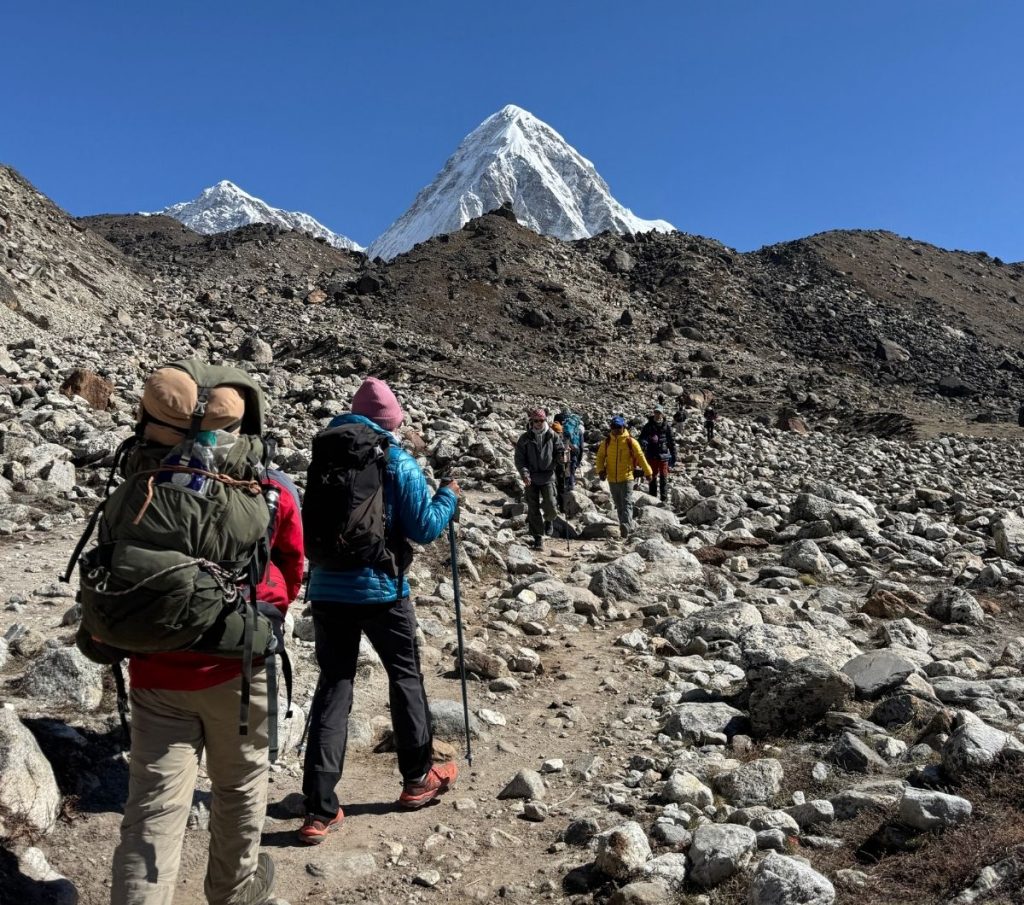
November falls in peak autumn trekking season and is among the busiest EBC trek seasons. However, Everest Base Camp crowds in November vary week to week and aren’t equally busy throughout the month. While the first week of November is moderately busy, crowds start to decrease by the second week. One reason the region sees fewer trekkers by the second week is the dropping temperature.
Early November EBC trail is still busy because late-October trekkers enjoy the autumn season. Teahouses in places like Lobuche can be busy, as you can see in the dining hall when everyone gathers for food. By mid-November, the crowds start to decrease. You can walk for long hours with very few trekkers around. Late November is quieter with fewer trekking groups on the route. But as it gets colder, some teahouses at higher elevations may start closing for winter, so check availability before you trek.
For anyone wanting a less crowded Everest Base Camp trek experience, the second week and onward offer a good chance. But you should be ready for colder temperatures. Still, you can enjoy peaceful routes, quieter teahouses, and clear mountain views, which makes the November Everest Base Camp trek unforgettable.
Pros & Cons of Trekking to EBC in November
No matter when you trek, there will always be some pros and some cons. The Everest Base Camp trek in November is no different. Although November offers clear weather, mountain views, and fewer crowds, it still has some drawbacks.
Pros of EBC Trek In November
- Less Crowds Later in the Month: While early November can still be busy, the number of trekkers slowly decreases around mid-November. If you trek in the second week of the month, you can enjoy the world’s iconic journey on a quieter route without queuing anywhere.
- Clear Skies and Amazing Views: Everest Base Camp trek in November brings dry weather and clear skies. So, trekking in Everest Base Camp during these months means witnessing the finest sights of Mount Everest, Ama Dablam, Lhotse, Nuptse, and other peaks of the Khumbu Valley.
- Beautiful Night Skies: Another major benefit of November EBC trekking is the chance to see clear nights with clear skies and no dust.
- Good Route Conditions: November offers dry trails and little risk of rain or snow, making the route d easier to walk.
- Festival: Everest Base Camp Trek in November is a great time to experience Sherpa culture in the Khumbu region. Depending on the Tibetan lunar calendar, you may witness Mani Rimdu, a major Sherpa Buddhist festival, celebrated at Tengboche Monastery.
- Amazing Sunrise: Clear November weather also makes viewpoints like Kala Patthar and Hotel Everest View stunning, and the sunrise unforgettable with changing golden sunlight.
- Reliable Flights: Flights to and from Lukla are a major factor affecting the EBC trek because of unpredictable weather. But November doesn’t face that challenge because it has stable weather, which makes flights reliable.
- Better Hospitality: Another special part of the Everest Base Camp trek in November is the warmer welcome in the teahouses along the route. In busy times, teahouse owners can’t provide personal care because of the crowds. This time gives you more time to interact with locals, learn about Sherpa traditions, and enjoy their hospitality.
Cons of EBC Trek in November
- Freezing Temperature: After November, the winter season begins. The cold season’s effects start to be felt by the second or third week of November. Especially at higher altitudes like Gorak Shep and Everest Base Camp, temperatures drop to −20°C to −25°C at night.
- Shorter Days: As November progresses, daylight becomes shorter, so you need to start your walk early and end the day’s trek in the early afternoon.
- Some Teahouses may Close: By late November, some high-altitude teahouses may start closing for winter. So, you might get fewer accommodation options in high-elevation locations.
Food & Accommodation During EBC Trek in November
Food and accommodation on the route to Everest Base Camp trek in November are almost fully operational. Especially during the first half of the month, teahouses in villages including Namche, Tengboche, Dingboche, Lobuche, and Gorakshep are open and serve trekkers while offering warm food. However, the early months are busy; from mid-November onwards, very few trekkers remain, which is good for trekkers seeking a quieter experience.
The biggest change in accommodation happens in late November, as winter arrives. High-altitude teahouses begin closing or offer far fewer services. Still, accommodation on the Everest Base Camp route won’t be completely closed, but pre-booking is recommended. On the EBC route, you’ll find simple family-run teahouses that provide twin-sharing rooms with a blanket and pillow. Although the blankets provided offer comfortable warmth in early November, you’ll need a sleeping bag by the end of the month.
Everest Base Camp trek in November also changes the experience inside the teahouses. The dining room serves the warmth station with the central bukhari stove. Later in the month, you find water pipes freezing, which makes showers, washing clothes, and even toilet facilities less convenient.
For food, you can eat at any teahouse along the way. Although the options are limited, they provide a real taste of the Himalayas. Common food options you’ll get on the Everest Base Camp Trek in November include dal bhat, thukpa, momos, garlic soup, Tibetan bread, fried rice, noodles, and eggs. At lower locations, you may even find western foods, while menus are more basic with fewer options at high altitudes, especially when winter is arriving.
EBC Trail Weather Condition & Temperature In November
The weather on the Everest Base Camp trek in November is dry, stable, and clear. Rainfall averages only around 15 mm for the whole month, so you rarely deal with wet trails or hidden peaks.

But the temperature depends far more on your altitude than on the date. You can walk in a t-shirt near Lukla in the afternoon and need a down jacket at Lobuche the same evening. This is why so many trekkers pack wrong.
| Place | Elevation | Daytime Temperature | Nighttime Temperature |
|---|---|---|---|
| Lukla | 2,860m | 10°C to 15°C | 0°C to 3°C |
| Namche Bazaar | 3,440m | 8°C to 12°C | -2°C to 0°C |
| Tengboche | 3,867m | 6°C to 10°C | -5°C to -3°C |
| Dingboche | 4,410m | 4°C to 8°C | -8°C to -10°C |
| Lobuche | 4,940m | 2°C to 6°C | -12°C to -14°C |
| Gorak Shep | 5,164m | 0°C to 5°C | -15°C and below |
| Everest Base Camp | 5,364m | Around -3°C | Around -12°C |
On the Everest Base Camp Trek in November, temperature changes across the month itself, not just across the trail. Early November still feels like autumn, with mild afternoons and manageable nights. By the third week, most stops are around 4°C to 5°C colder than they were at the start.
Wind matters as well. Above 4,000 meters, the wind chill makes the air feel much colder than the reading on your thermometer. The open stretch between Dughla and Lobuche is where trekkers usually notice this first.
Daylight is another thing to plan around. At the start of November you get roughly 11 hours of daylight, and by the end of the month it drops closer to 10 hours. The sun also disappears behind the ridges well before it actually sets, so the valleys turn cold in the late afternoon.
So the weather in November is not difficult, it is only cold. With dry trails, clear skies, and very little rain, it is one of the easiest months to walk in as long as your gear matches the altitude you are sleeping at.
Everest Base Camp Trek in November Vs Other Months
Everest Base Camp Trek in November is the driest of all the popular trekking months on the Everest route. It is not the warmest, and it is not the busiest, which is exactly why many trekkers choose it.
| Month | Average Day Temp | Average Night Temp | Rainfall | Crowd Level | Views |
|---|---|---|---|---|---|
| September | 4°C | -5°C | 95 mm | Busy | Good, some cloud left from monsoon |
| October | 0°C | -9°C | 38 mm | Busiest | Excellent |
| November | -3°C | -12°C | 15 mm | Moderate, dropping | Excellent |
| December | -5°C | -15°C | 10 mm | Quiet | Excellent |
| March | -5°C | -17°C | 8 mm | Moderate | Good |
| April | -1°C | -12°C | 38 mm | Busy | Good, haze builds later |
| May | 2°C | -8°C | 38 mm | Busy | Good, afternoon cloud |
Mostly trekkers who choose November against October. October is warmer by about 3°C both day and night, and that is a genuine comfort difference at Gorak Shep. But October also gets more than twice the rainfall of November and carries the heaviest crowds of the year.
November against December is a smaller gap than people expect. December is only around 2°C colder. What changes is daylight, teahouse availability, and how many trekkers you see, so
December suits people who actively want an empty trail. November against spring is a different trade. April and May give you warmer nights, but they also bring more afternoon clouds and haze that softens the mountain views. If clear skies are your priority, November wins.
So if you want the driest trails and the clearest peaks, November is the strongest month on this list. If you want warmth above everything else, October or May will suit you better.
Everest Base Camp Trek in November Preparation Tips
- Bring a four-season sleeping bag: Get one rated to at least -15°C, and add a liner for the nights above Dingboche. This is the single most important item on your packing list for November.
- Pack a proper layering system: Use a moisture wicking base layer, a fleece or mid layer, a down jacket, and a windproof outer shell. You will add and remove these several times a day as you move in and out of the sun.
- Start walking early each day: Leave the teahouse by around 7 am. This gets you into the next village before the afternoon cold sets in, and it gives you the clearest morning views.
- Protect your batteries: Cold drains phone and camera batteries quickly. Carry a 20,000 mAh power bank and keep your devices inside your sleeping bag at night so they hold charge.
- Keep your water from freezing: Do not leave your bottle outside the teahouse or in an outer pocket overnight. Store it in your sleeping bag, and carry it upside down during the day so ice does not form at the cap.
- Bring proper sun protection: The November sun is strong at altitude even when the air is cold. Carry SPF 50 sunscreen, lip balm with SPF, and sunglasses with good UV protection.
- Wear broken-in waterproof boots: Trails near Lobuche and Gorak Shep can freeze overnight and stay icy through the morning. Boots with good grip and trekking poles handle this easily.
- Add buffer days for Lukla: Keep two spare days at the end of your trip. Even in a stable month, one delayed flight can affect your international connection.
- Drink 3 to 4 liters daily: The air in November is very dry, and dehydration causes headaches that feel like altitude sickness. Warm drinks at the teahouse count toward this.
- Check your insurance limits: Your policy should cover trekking up to 6,000 meters, including helicopter evacuation and emergency medical treatment.
What Trekkers Ask About Trek to Everest Base Camp Trek in November
Is November too cold for the Everest Base Camp Trek?
Is November better than October for the Everest Base Camp Trek?
Are there flight delays to Lukla in November?
What festivals can I experience during a November trek?
Is the EBC Trail crowded in November?
Can beginners trek in November, or is it better suited to experienced trekkers?


