


If you ask me, the most exciting, full of wonder, a first taste of challenge, and tired but satisfied journey on the Everest Base Camp trek, I’ll remember the second day: Phakding to Namche Bazaar. After a flight from Kathmandu to Lukla and a short walk to Phakding the previous day, I was full of energy and excitement for the Namche Bazaar trek.
I was excited to officially take a step towards my ultimate destination, Everest Base Camp. I was eager to see the mountain sights finally and, at the same time, quite nervous about the first challenging section of the trek. As my journey started, every step I took felt like walking deeper into the Himalayas. I walked through the conservation area of Sagarmatha National Park, where I observed flora and fauna; I crossed the largest suspension bridge while listening to the roar of the Dudh Koshi River; and I walked through steep sections.
To my shock, by the time I reached Namche Bazaar, I didn’t feel demotivated or tired; instead, I felt super proud of myself. The feeling of stepping into Namche Bazaar, the gateway to the Everest Base Camp Trek, was indescribable but surreal.
So, are you ready to know exactly what the trek from Phakding to Namche feels like? Step by step? Make sure to read this blog till the end, and I’ll ensure you have a first-hand understanding of most of the journey, from its trail to views, important stops, challenges, and memorable experiences.
Phakding to Namche Trek Distance
The distance from Phakding to Namche Bazaar is 10-12 km (6.21- 7.46 mi), & the trek takes about 6 hours to complete with a 790 m elevation gain. At first, the route felt comfortable as I followed the Dudh Koshi River through forests and small Sherpa villages. But as I continued, the path became challenging, leading me up stone steps and through uphill sections that tired my legs.
One of the most memorable parts of the journey between Phakding and Namche Bazaar was crossing the suspension bridges, especially the famous Hillary Suspension Bridge. After crossing it, I faced a long and steady walk towards Namche. The section felt tiring as I gained altitude and walked through a steady stretch. But the excitement of reaching Namche Bazaar kept me going.
Phakding to Namche Bazaar Route Breakdown
I left Phakding village after breakfast and made my way alongside the Dudh Koshi River. The walk was pleasant and peaceful through a forested section of pine and rhododendron. Within 20 minutes or so, I reached Benkar village (2,630 m), 2 km from Phakding. From there, I continued toward Toktok, 1.5 km from Benkar, with the sound of the rushing Dudh Koshi.
Covering another 1.5 km from Toktok, I reached Chumoa, where the valley views opened up. From there, I began to see terraced fields and monasteries that gave me my first glimpse of Sherpa culture. I also walked past the monasteries, following the traditional clockwise direction, as other trekkers and locals do.
Continuing the Phakding to Namche walk, I reached Monjo, where I stopped at the permit checkpoint before entering Sagarmatha National Park. Monjo is just 1 km from Chumoa. A 1.5 km walk from Monjo brought me to Jorsalle, where I had lunch and rested before the more challenging section ahead.
From Jorsalle, I continued following Dudh Koshi through the forest, with several suspension bridges along the way. The most memorable crossing for me was the Hillary Suspension Bridge. Walking across it while watching the river flowing below was both exciting and slightly nerve-racking. Jorsalle to Hillary Suspension Bridge is 2 km.
After the bridge, I entered a long and steady forest climb towards Namche Bazaar. This was the section where I really began to feel the day’s distance and altitude gain. The stone steps seemed unfinished, but knowing that Namche was getting closer kept me motivated. Eventually, I passed the Namche Police Checkpoint and continued along the final walk into Namche Bazaar.
By the time I got to Namche Bazaar at 3,440 m, I was tired from the climb. But the excitement of reaching the gateway to Everest Base Camp and knowing I was now at the heart of the Khumbu region made the effort worthwhile, and I forgot every challenge the climb had posed. The distance between the Hillary Suspension Bridge and Namche Bazaar is 2-2.5 km.
Note: The same Phakding to Namche route is also Day 2 of the other EBC trek variations. Whether you choose a 12-day, 14-day, or longer trek, you’ll walk along the same pathway, see the same mountain, and experience the same challenges on Day 2. The main difference is how you customize your itinerary after Namche Bazaar.
Do You Need Permits During the Phakding to Namche Route?
Yes, you need permits for the Phakding to Namche route. Sagarmatha National Park Entry Permit and the Khumbu Pasang Lhamu Rural Municipality Permit are two permits required for the route. I had my documents checked along the way. Also, I did not need separate permits for every village or section, yet I had to carry the required trekking permits throughout the trek.
As I walked from Phakding toward Namche, I reached Monjo, where there is an official permit checkpoint to enter Sagarmatha National Park. This was the point where I showed my permits at the checkpoint, and only after they were checked could I continue the walk. So, I recommend that you make sure you have those two permits before starting the trek and keep them within your reach.
For me, the permit checking part was a simple formality. I spent only a short time at the checkpoint. The officers at the checkpoint were so friendly, so I had some conversations with them as well.
Phakding to Namche Bazaar Major Location Highlights
My journey from Phakding to Namche Bazaar was more than just a walk from one location to another. The beautiful views and landmarks along the way made the journey as memorable and exciting as reaching Namche Bazaar. Some of the major location highlights that made my journey visually appealing include:
Thamserku
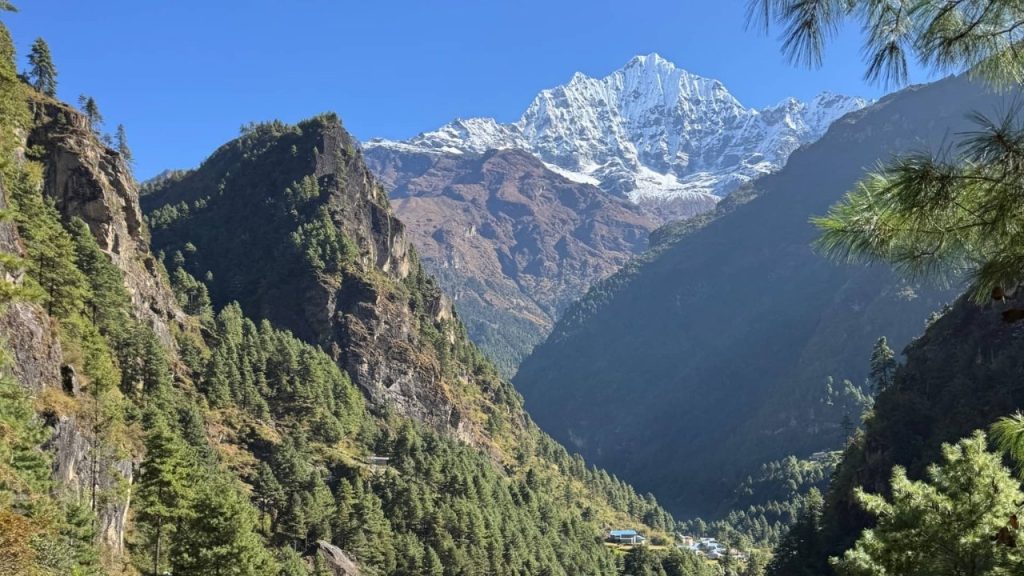
As I walked towards Benkar, I started getting beautiful views of Mount Thamserku. The mountain rose above the trees and surrounding hills, giving me one of my first views of the day’s mountain peak. The view was not just a sight, but also a reminder that I am traveling in the home of mountains, and other stunning peaks are awaiting me.
Toktok
The pathway through the Toktok took me through peaceful areas alongside the Dudh Koshi River. I could hear the river flowing as I walked below the pine and rhododendron forests. The mix of green forest, the sound of the river, and crisp mountain air made this location exceptionally beautiful and peaceful. Locals said that a seasonal waterfall is seen in the village, but I wasn’t lucky enough to see it.
Monjo
When I reached Monjo, I stopped at the permit checkpoint and took in the village’s beauty. Monjo sits in a peaceful river valley on the banks of the Dudh Koshi River, surrounded by pine and rhododendron forests. I also saw traditional stone houses, fluttering prayer flags, mani walls, and rotating prayer wheels in every direction.
Jorsalle
Jorsalle was another stunning location along the trek from Phakding to Namche. It is the last permanent human settlement and where I had lunch. High cliffs, pine trees, and cascading waterfall views surround the village, which made my decision to have lunch there worthwhile.
Suspension Bridge
One of the most exciting parts of the trek from Phakding to Namche was crossing the suspension bridges over the Dudh Koshi River. I crossed about 5 suspension bridges, including the famous Hillary Suspension Bridge, named after Sir Edmund Hillary. Honestly, my jaw dropped when I first saw the suspension bridge, hanging about 125 to 135 meters above the Dudh Koshi River. I thanked God that I didn’t have a fear of altitude; otherwise, I wouldn’t have dared to cross the bridge.
Kongde Ri
As I climbed toward Namche Bazaar, I noticed Kongde Ri across the valley. It was also visible from the west of Toktok and Chumoa village, but not as clearly when I walked toward Namche. Similarly, as I crossed the high suspension bridges, I could see the mountain rising on the north/east side.
Namche Bazaar
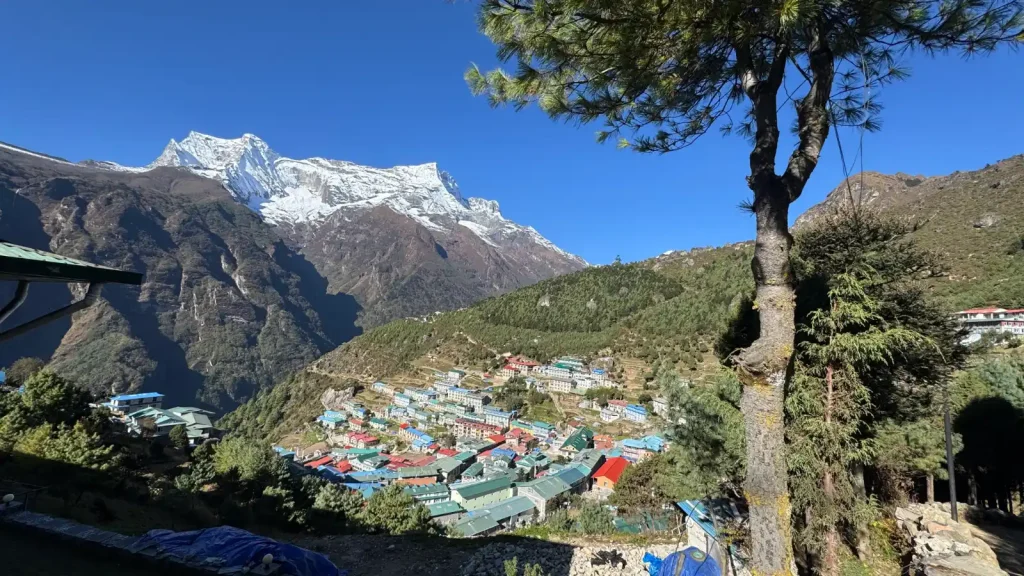
After hours of walking, I finally reached Namche Bazaar, and seeing the colorful town with prayer flags, numerous houses, and shops was the happiest moment of the day. Getting there quickly made me understand why people call it the heart of the Everest region. One thing that surprised me in the village was the crowd. I was amazed to see how many people were in such a remote location. I also liked the mix of ancient Sherpa culture and modern trekking life; Namche Bazaar was special.
Note: For trekkers who don’t have time or physical fitness to take a 14-day Everest Base Camp Trek itinerary, the 5-day Everest View Trek is an ideal option. It follows the same route from Lukla to Phakding to Namche, then returns. So, if you want to experience the beauty of the Everest region on a short trip, the 5-day trek is a good choice.
Food and Water Availability on the Phakding to Namche Trek
While I walked from Phakding to Namche, I didn’t have to worry about carrying food and water for the entire day. This section of the route is well stocked, with plenty of tea houses, lodges, and water taps. The Nepal Tourism Board also notes that the section between Phakding and Namche has plenty of tea houses. However, Jorsalle is the last reliable stop before Namche Bazaar, so make sure to fill your tummy and carry water in this village.
I found food in almost all villages, including Benkar, Monjo, and Jorsalle. Most tea houses were simple but served filling meals, perfect for regaining energy for the walk. I especially found Dal Bhat filling and energizing, and I would recommend it to other trekkers in the Himalayas because it is filling and gives energy. The common choices I could find include:
- Dal Bhat
- Momos
- Noodles and Thukpa
- Pasta
- Tibetan Bread
- Pancakes and Porridge
- Eggs and toast
- Soups
- Tea, coffee, hot lemon, butter tea, and ginger tea
Regarding water, I saved a lot of money by carrying a reusable water bottle and water purification tablets. The section has many streams and taps where I filled my water whenever it ran out. Buying a water bottle on the trek is very expensive, and costs increase with altitude. So, I found carrying a bottle and drinking safely more practical.
Phakding to Namche Bazaar Trek Difficulty or Why this day feels harder than Day 1
The first thing I noticed when I started walking from Phakding to Namche Bazaar was that the day would be challenging and wouldn’t be as easy as Day 1. This second day’s distance was also longer than the first day’s, but distance wasn’t the only challenge; the biggest challenge was the long uphill climb from Hillary Suspension Bridge to Namche.
The first day, from Lukla to Phakding, felt easier because it involved a descent instead of an ascent. That day, I lost elevation instead of gaining it, which made the journey easier. But on the second day, I had to gain around 790 meters.
I found the section after Jorsalle and the Hillary Suspension Bridge especially challenging because the route took me through a steady section of forest, and it felt like every turn brought another uphill section. The higher I climbed, the more I noticed the altitude too.
Your Namche Bazaar Accommodation After the Climb
After a long climb from Phakding, I was more than ready to put my backpack down and lie on the bed. Namche Bazaar has plenty of accommodation options, from basic tea houses to lodge-style places. I stayed in a simple tea house, which was best for resting after a long day of trekking and exactly how it should be in the Himalayas. Also, I didn’t expect luxury because having a warm place to sleep felt like a luxury itself.
The tea houses had a bed, mattress, pillow, and blanket, all necessary and enough for an overnight stay. One of my favorite parts was the common dining area. It was a warm place where trekkers gathered, shared stories about the day’s walk, and discussed the upcoming day while enjoying hot food and drinks.


