


Jagat is a small traditional hillside village along the Manaslu Circuit trail located at an elevation of 1,410 m in the Gorkha District of northern Nepal. The village lies beside the flowing Budhi Gandaki River. Likewise, Jagat lies in Chumnubri Rural Municipality in the Gandaki Province. Geographically, it is situated in a narrow river valley surrounded by steep hills and forested slopes.

Located between Machha Khola and Deng, Jagat is a stone-walled village that serves as a mandatory checkpoint for two essential permits: the Manaslu Conservation Area Permit (MCAP) and the Restricted Area Permit (RAP). The conservation area covers about 1,663 square kilometers across northern Gorkha, extending towards the Tibetan border and covering the Manaslu and Tsum Valley.
The journey to Jagat begins in Kathmandu with a long road trip to Machha Khola, the common starting point of the Manaslu Circuit. The drive takes around 7-10 hours, depending on road and traffic conditions, and follows the route through Dhading and Gorkha. From Maccha Khola, the journey to Jagat continues on foot, following the Budhi Gandaki River. The walk to Jagat from Machha Khola takes 6-7 hours and passes through the villages of Khorlabesi, Tatopani, Dobhan, and several suspension bridges.
Are There Any Permit Checkpoints in Jagat Village?
Yes, Jagat Village has an official permit checkpoint, and it is one of the most important stops on the Manaslu Circuit Trek. After following the Budhi Gandaki Valley toward Jagat, trekkers enter a more regulated section of the Manaslu region, so officials check permits before they continue farther into the circuit.
At the Jagat checkpoint, officials verify the Manaslu Restricted Area Permit (RAP) and Manaslu Conservation Area Permit (MCAP), along with the required local entry documentation where applicable. The checkpoint also records and verifies trekkers’ details before they proceed toward villages such as Deng, Namrung, and Lho.
This makes Jagat more than just an overnight stop. It effectively marks the point where the trek moves deeper into the restricted and protected Manaslu landscape. Keeping the original permits and passport readily accessible can make the checking process quick and straightforward.
Permit requirements and checkpoint procedures can change, so trekkers should confirm current requirements with their registered trekking agency before starting the trek.
Location & Cultural Highlights in Jagat Village
Budhi Gandaki River
The Budhi Gandaki River flows beside Jagat village, creating exceptionally stunning views and the peaceful sound of flowing water. You can hear and see the river as you get near the village and even as you walk from Machha Khola to Jagat. The constant sound of the flowing river on the way and in the village creates a calm environment even after hours of walking.
The Budhi Gandaki River also has a role in the Manaslu Circuit Trek, not only in Jagat village. Most of the trek route follows the Budhi Gandaki through steep-sided valleys with suspension bridges and riverside sections. So the river is not just a highlight in Jagat village; it also guides trekkers as it continues alongside higher villages like Deng, Namrung, and beyond.
Gurung and Tamang villages
Jagat and the surrounding lower Budhi Gandaki area showcases the cultural diversity of the Manaslu region. Each area reflects different Himalayan communities and how they live in harmony. Among these cultures, the Gurung and Tamang communities influence Jagat village and offer glimpses of their daily life, adding to the trek’s cultural charm.
Traditional Himalayan Architecture
One of Jagat’s unique location highlights is its traditional mountain settlement and architecture. The communities’ settlements reflect ancient Himalayan building skills, with narrow alleyways, varied stone-paved paths, and stone-built houses. The stone used for the houses is locally available, showing how much locals value nature and its resources. Therefore, walking through the village or just staying at the village’s teahouse gives a close look at an everyday Himalayan village in the Manaslu region.
The Village Market
Jagat has a small local market environment rather than a large marketplace. The market provides basic but essential items required for trekkers in higher villages. It also serves as a last-minute stop for supplies like bottled water, snacks, and basic trekking items. Similarly, its modest scale is part of the trek experience as it feels more like a working mountain settlement than a tourist hub. The village also provides a glimpse of how supplies and daily needs are managed in remote areas.
Best Time to Visit Jagat Village
The best times to visit Jagat Village are spring and autumn, when the village is most inviting for exploring its traditional surroundings. At an elevation of 1,410 meters, the landscape is still green and relatively warm compared with the high-altitude villages farther along the Budhi Gandaki Valley. The village itself is known for its stone-paved paths, traditional houses, surrounding waterfalls, and impressive hillsides that mark the beginning of the more remote Manaslu trekking experience.
Spring (March to May)
From March to May, Jagat becomes greener and more stunning. The forests around the Budhi Gandaki Valley start filling with fresh vegetation, while waterfalls and streams add movement to the landscape. The mild temperatures also make it comfortable to explore the village before continuing toward Deng and Namrung.
Autumn (September to November)
September to November is particularly rewarding around Jagat. Following the monsoon, the surrounding hills remain fresh and green, while clearer skies reveal the amazing valley walls. October and November are especially pleasant for walking through the village and beginning the slow transition from the lower, warmer Manaslu region toward its colder high-altitude landscapes.
Summer/Monsoon (June to August)
The monsoon/summer months of June to August make Jagat exceptionally green, with waterfalls and streams becoming more prominent around the Budhi Gandaki Valley. However, heavy rainfall can make the approach roads and trails muddy and slippery, while landslides may occasionally affect travel.
Winter (December to February)
Winter brings colder mornings and evenings, but Jagat remains relatively mild because of its lower elevation. With fewer trekkers on the trail, the village takes on a quieter atmosphere, making it a peaceful stop to experience local life and the traditional stone-built surroundings.
Major Treks That Highlight Jagat Village
Jagat is a noticeable stop on the trekking routes through the Manaslu region. It is particularly important because it serves as the entry point to the restricted Manaslu region and the Manaslu Conservation Area. The village is included in the standard Manaslu Circuit Trek and Tsum Valley Trek, while combined Manaslu-Tsum itineraries also highlight Jagat village.
Manaslu Tsum Valley Trek
The Manaslu Tsum Valley Trek combines the standard Manaslu trail with the remote Tsum Valley. On this trek’s itinerary, you reach Jagat after walking from Machha Khola, a 4-5-hour trek covering 9.5 km. From Jagat, the trail takes you to Lokpa and the Tsum Valley, where you’ll pass through the traditional villages of Chumling, Chhakamparo, and Nilem, and reach Mu Gompa. After exploring the Tsum Valley, the route reconnects with the Manaslu Trail.

Manaslu Circuit Trek
The Manaslu Circuit Trek is the main trekking route that passes through Jagat Village. You reach Jagat Village on the second day of the itinerary, stay overnight, and continue into the Manaslu region the following morning. The route passes through villages of Deng, Namrung, Lho, Samagaun, Samdo, and crosses Larkya La. Afterward, the trek descends to Bimthang and Dharapani and returns to Kathmandu. This makes Jagat an important highlight on this route, as it is the first major restricted-area checkpoint where the journey starts to feel more remote.
Transportation & Route Options to Get to Jagat
Reaching Jagat on the Manaslu Circuit is possible by a combination of overland travel and walking, as there is no direct flight access to the Manaslu region. To reach Jagat, you must first drive to Machha Khola. Starting from Kathmandu, the drive takes you through Dhading Besi, Arughat, Soti Khola, and Machha Khola.
- Kathmandu to Machha Khola Drive Route at a Glance: Dhading Besi → Arughat → Soti Khola → Machha Khola
To get to Machha Khola from Kathmandu, trekkers have several transportation options. For budget travelers, a local bus is the best option. If you want comfort and a moderate fare, a shared jeep can be ideal. You can also opt for a private jeep, which is practical for trekkers traveling in groups who want more flexible departure times and a comfortable ride.
- Transportation Option and Cost:
| Transportation Option | Cost (Per person) |
| Local Bus | NPR 800 to NPR 1,500 ($5–$10 USD) |
| Shared Jeep | NPR 3,900 ($25 USD) |
| Private Jeep | NPR 28,991 to NPR 45,777 ($190 to $300 USD) |
From Machha Khola, you must trek to get to Jagat. The walk takes you through river gorges, forests, waterfalls, and suspension bridges, making every step visually appealing and worth the trek. The trek takes you through villages of Khorlabesi, Tatopani, Dobhan, and Yaru Bagar before reaching Jagat.
- Machha Khola to Jagat Trek Route at a Glance: Khorlabesi → Tatopani → Dobhan → Yaru Bagar
How Hard is The Hike to Jagat Village?
The hike to Jagat village that starts from Machha Khola is generally moderate. The main factor that makes the walk to Jagat moderately difficult isn’t altitude; it is spending hours on uneven paths and going up and down the Budhi Gandaki gorge. You may also climb sections of stone steps and cross a suspension bridge multiple times, which can be tiring.
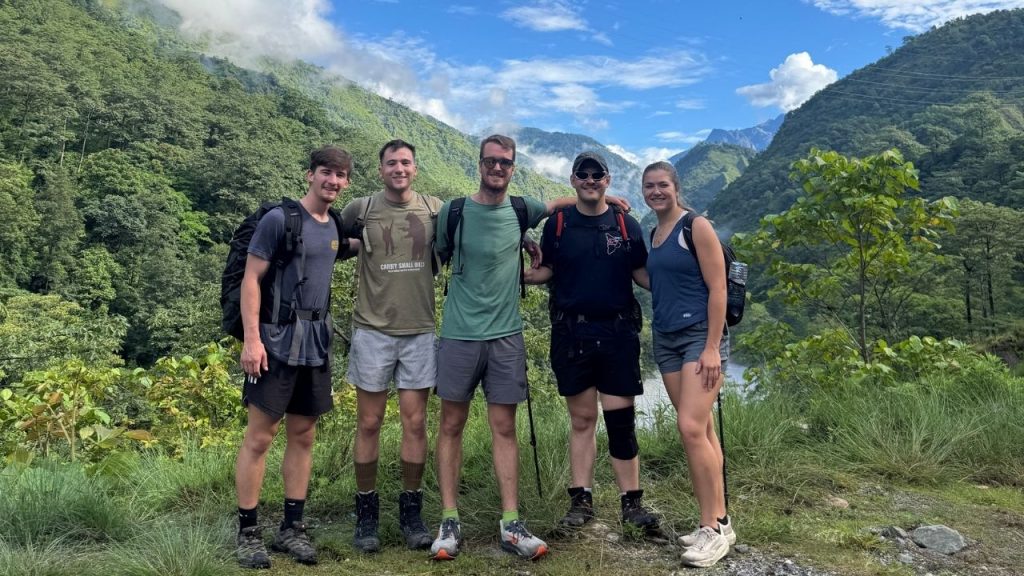
Some parts of the way to Jagat follow narrow or rocky sections beside the Budhi Gandaki River, and wet sections can make the stone and steps slippery. At the same time, the lower parts of the route can be warm, and the combination of heat, repeated climbs, and a heavy backpack can be physically challenging.
However, for trekkers with good physical fitness and previous trekking experience, the hike to Jagat is achievable with less challenges. But for someone who rarely walks for several hours, the first section of the trek may feel demanding. With a comfortable walking pace, an early morning start, and avoiding an unnecessary backpack, the trek is manageable even for first-time trekkers.


