


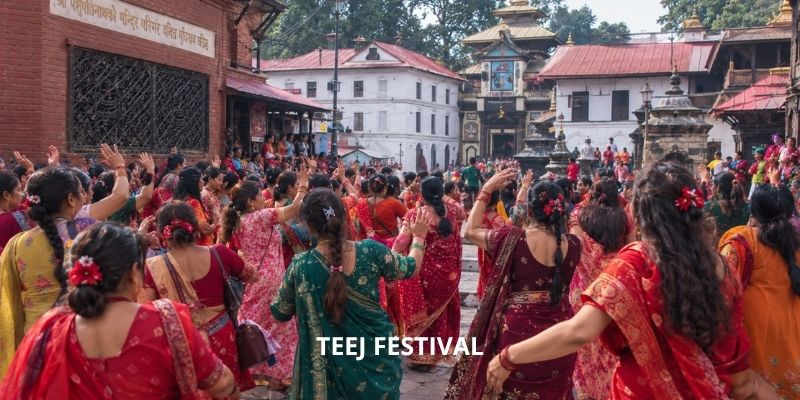
Nepal is known for its diverse calendar of festivals, with more than 50 celebrated across the country by different ethnic and cultural communities. People celebrate each festival according to their culture and tradition. But one festival is celebrated mainly by women: Teej. Teej, also known as Haritalika Teej, it is one of the most important festivals for Hindu women in Nepal. The main Teej observances take place over several days, beginning with Dar Khane Din, followed by Haritalika Teej and concluding with Rishi Panchami.
The religious roots of the Teej festival are connected to Goddess Parvati’s devotion to Lord Shiva. That’s why women celebrate it by fasting for an entire day, without even a drop of water, to pray for their husbands’ long lives and a happy family life. Unmarried women may also fast and pray for a good and prosperous married life in future. But the festival has changed much more than just a day of fasting and worship. Today, it brings women together through dancing, music, family gatherings, and shared experiences.
Another interesting part of Teej is that it creates a unique social experience where women can express themselves as they are. They meet other women, dance to songs that express their experiences and womanhood, and temporarily forget the stresses and challenges of everyday life. In Kathmandu, Pashupatinath Temple is the main center of the Teej activity. On the main fast day, large numbers of women gather in red clothing to worship Shiva. The sight of thousands of women in the same color is the festival’s most recognizable scene in the country.
When is the Teej Festival in 2026?
In Nepal, Haritalika Teej 2026 falls on Monday, 14 September (Bhadra 29, 2083 B.S). 14 September is the main fasting and worship day of Teej. But the celebration starts from Dar Khane Din on Sunday, 13 September, and concludes with Rishi Panchami on Tuesday, 15 September. So, the Teej festival lasts 3 days, although the main fasting day is the most important.
Dar Khane Din (September 13)
The Teej celebration traditionally starts with Dar Khane Din, the day before the main fast. In 2026, it falls on Sunday, 13 September. It is a day for social gatherings, when women meet their mothers, sisters, friends, and relatives, often at their maternal homes, and take part in Teej celebrations.

As shown in the image, Dar includes a large meal consisting of rice, meat, pickle, sweets, vegetables, and fruits. The meal allows women to eat well before the day-long fast that follows.
The main reason for this Dar Khane Din is that the following day involves a strict fast, so they prepare their body with plenty of food. Women may eat and enjoy the program until around midnight, so the late-night feast becomes the final opportunity to have a proper meal before the strict fasting the next day.
Haritalika Teej (September 14)
Monday, 14 September, is the main day of Teej, when women traditionally fast and worship Lord Shiva and Goddess Parvati. Many women dress in red sarees or other traditional clothing, wear jewelry, apply mehendi, and visit Shiva temples. In Shiva temples like Pashupatinath, women of different ages and backgrounds come together, and the temple grounds become a place for prayer and cultural expression.
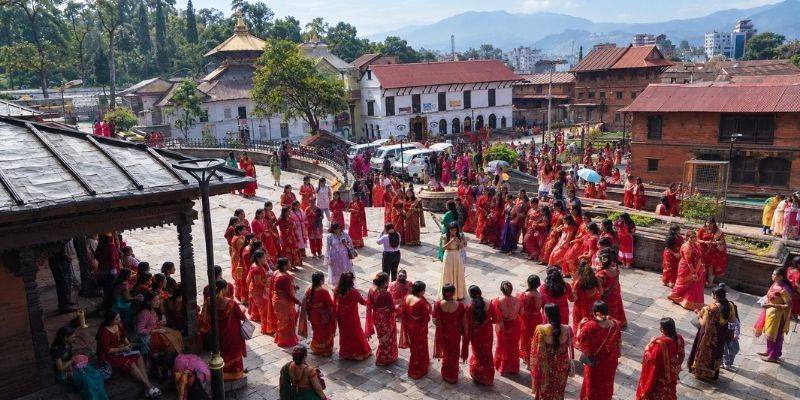
As shown in the above picture, that’s how women celebrate the Teej festival. They wear traditional red sarees, gather in a temple courtyard, and perform a dance. The picture also shows that Teej is a time for women to come together in public spaces and express womanhood.
Rishi Panchami (September 15)
Rishi Panchami falls on Tuesday, 15 September 2026, two days after the main Teej fasting day. The day is associated with worship of the Sapta Rishi (the Seven Sages) and purification rituals. For most women, this day is an important concluding part of Teej. Traditional rituals include bathing, worshipping the seven sages, and observing other purification practices.
One traditional practice involves using dattun (tooth-cleaning twigs) as part of the purification ritual. Traditionally, Rishi Panchami has been associated with ritual purification and beliefs surrounding menstrual observances in older Hindu traditions.
History of Teej Festival
The history of Teej is connected with the Hindu story of Goddess Parvati and Lord Shiva. According to the traditional belief, Goddess Parvati wanted to marry Lord Shiva. But, her father, King Himalaya, wanted her to marry Lord Vishnu. Parvati didn’t want anyone because she had already chosen Lord Shiva. So, she performed intense meditation and tried to win Shiva’s heart. This story is considered the foundation of the fasting and worship associated with Teej.
Seeing Goddess Parvati’s devotion to Lord Shiva, her female friends understood her wishes and secretly took her away to a forest so that she could avoid the marriage set by Parvati’s father. This is where the name Haritalika comes from; harit means being taken away or carried off and alika refers to a female friend.
After being carried to the forest, Parvati continued her devotion to Shiva, making a Shiva lingam from sand and worshiping the lord with prayers. Mythologically, there is a belief that she performed strict penance, observed various vows, and practiced meditation over 108 lifetimes. Eventually, Shiva accepted her devotion, and she became his wife. Therefore, women in Teej worship Shiva and Parvati and fast with prayer for a good married life or the longevity of their husbands.
Today, Teej continues to combine its religious roots with social celebration and remains an important women-centred social and cultural festival.
Why Do Women Wear Red Sarees & Ornaments in Teej?
During Teej, women wear red sarees and ornaments to symbolize marital joy, deep devotion, and the celebration of womanhood. Red is the festival’s most recognizable color, and it is also considered auspicious. If you travel to Nepal during Teej, you’ll find women wearing red sarees or kurtas, bangles, tika, earrings, and red glass bead necklaces (pote) with gold pendants (tilhari).
For married women, red is also considered a lucky color and is connected to marital identity and saubhagya. Because red is associated with Goddess Parvati and marital auspiciousness, dressing in a bridal-like appearance can also be seen as a way to honor her relationship with Lord Shiva. Additionally, the ornaments with the red dress make the celebration more appealing.
Can Tourists Participate in Teej?
Yes, tourists can participate in Teej. In fact, if you see a group of women dancing and singing anywhere, you may even be invited by locals to join in. Although Teej is celebrated throughout Nepal, Pashupatinath Temple in Kathmandu is one of the main gathering places for devotees. However, the area is overcrowded, so prepare accordingly.
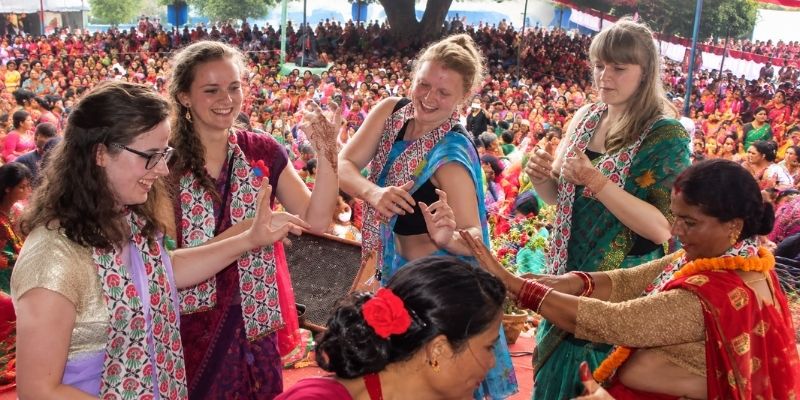
The image shows how foreign visitors can be warmly welcomed into Nepal’s Teej celebrations. Rather than being left on the sidelines, visitors may be invited to sing and dance alongside local women. The scene reflects Teej’s welcoming spirit, where tourists can experience the festival up close and enjoy its traditional music, dance, and festive atmosphere.


