



Muktinath Temple sits at 3,710 m in Mustang, Nepal. It is holy for Hindus and for Buddhists also both pray in the same small courtyard, on the same cold stone floor. The valley lies right under Thorong La Pass, in Gandaki Province.
The name is simple. Mukti means liberation. Nath means lord. Hindus call the deity Shri Mukti Narayana, a form of Lord Vishnu. Tibetan Buddhists know the same place as Chumig Gyatsa, which means hundred waters.
Most people sleep in Ranipauwa. It is the small village just below the temple, and every jeep and bus stops there. From Ranipauwa it is about a 20 minute walk up to the gate. Not far. But it feels long at this height, so horses wait near the road for anyone who would rather ride.
Why Is Muktinath Temple Sacred to Two Faiths?
Not many places in the Himalaya are shared like this. Hindu pilgrims and Buddhist pilgrims walk the same path, on the same day, and nobody thinks it is strange.
For Hindus, Muktinath is one of the 108 Divya Desams, the holy homes of Lord Vishnu named in old Tamil hymns. It is the only one outside India. And the belief is strong: a visit here brings moksha, freedom from the circle of birth and death. That is where the name place of liberation comes from.
For Buddhists, this is one of the 24 Tantric places. They believe Guru Rinpoche, also called Padmasambhava, sat and meditated here on his way to Tibet. Buddhist nuns from the gompa nearby look after the shrine. Same nuns, both sets of pilgrims, no fuss.
Then there is the river. The Kali Gandaki runs below the valley, and its bed holds black fossil stones called Shaligram. Hindus treat them as natural forms of Vishnu. Many pilgrims carry one home in their bag.
What Are the 108 Water Spouts at Muktinath?
Behind the main shrine there is a curved wall. On it sit 108 brass spouts, each one shaped like a bull’s head. People call this the Muktidhara, and for most pilgrims it is the whole reason they came.
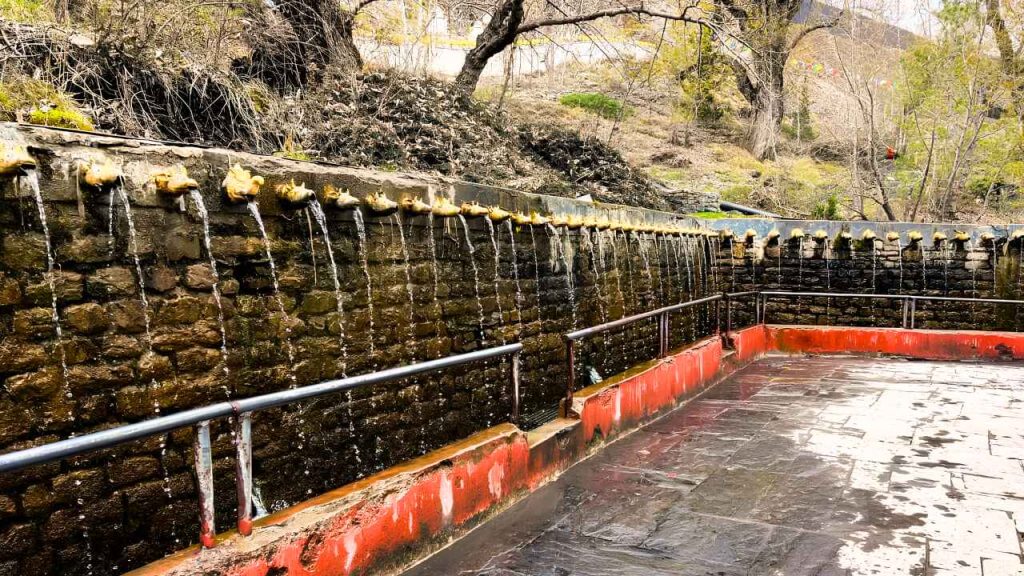
Water runs from every spout, all day, all year. It comes from the Kali Gandaki source higher up. Pilgrims walk under all 108 in one go, head down, shoulders wet, no stopping. Why 108? The number is sacred in both faiths count the beads on a mala and you get the same figure.
In front of the temple you will also find two kunda, the holy ponds. Plenty of people bathe there before or after the spouts. Together the two rituals are said to wash off bad karma.
One honest warning. That water comes straight off a mountain and it is close to freezing, even in May. Bring a towel. Bring dry clothes, and something warm to pull on the second you finish. Mornings are sunny, so go early if you can.
The Eternal Flame at Jwala Mai Temple
Walk a minute from the main shrine and you reach the Jwala Mai Temple. This is the strangest sight in the valley, and the quietest.
Inside, a small flame burns beside spring water. It is natural gas, seeping out of the rock, and people say it has burned for thousands of years. Fire born from water. Hindus see the goddess of fire in it. Buddhists tie it to Guru Rinpoche’s meditation.
The flame sits behind a little curtain, and the caretaker pulls it back for visitors. The room is low and dark. So move slow, and keep your voice down.
How Do You Reach Muktinath Temple?
There is no road straight from Kathmandu. Everyone goes through Pokhara first. After that you have three ways up.
By Flight via Jomsom
The quick way is the Pokhara to Jomsom flight. Twenty minutes, maybe twenty five, straight over the Kali Gandaki. Planes leave early, between 6 am and 10 am, because the wind gets rough later in the morning.
From Jomsom airport it is 21 to 22 km up to Muktinath Temple. A jeep takes 45 minutes to reach the temple.
Good option if your days are short. But keep one spare day in the plan, because Jomsom flights get cancelled often due to wind and clouds.
By Road from Pokhara
By road it is around 200 km from Pokhara to Muktinath, and 6 to 10 hours in a 4WD jeep. The line goes Pokhara, Beni, Tatopani, Ghasa, Marpha, Jomsom, then up.
Part of that drive runs through the Kali Gandaki Gorge, the deepest gorge in the world. Some sections are rough and unpaved. That is why a jeep beats a car here, every time.
Buses cost the least. They also take 9 to 11 hours to Jomsom and the seats are hard. Still, many Nepali and Indian pilgrims pick this route, and they arrive fine.
On Foot Over Thorong La Pass
Trekkers come the other way round. On the classic Annapurna Circuit, Muktinath is the first village after Thorong La Pass, 5,416 m, which is one of the highest trekking passes anywhere.
On our 14 Days Annapurna Circuit Trek that is Day 10. You leave Thorong High Camp in the dark, cross the pass, then drop 1,656 m into Muktinath. About 15.6 km. Roughly nine hours.
Arriving this way means walking in on your own two legs, the way pilgrims did for hundreds of years.
How Much Does It Cost to Visit Muktinath?
Cost changes with your passport, the season, and how you travel. Here are rough 2026 numbers.
| Travel option | Approximate cost | Time |
|---|---|---|
| Pokhara to Jomsom flight (foreigners) | USD 100 to 165 one way | 20 to 25 minutes |
| Pokhara to Jomsom flight (Indian nationals) | Around NPR 10,600 | 20 to 25 minutes |
| Pokhara to Jomsom flight (Nepali nationals) | Around NPR 5,600 | 20 to 25 minutes |
| Pokhara to Jomsom bus | NPR 700 to 1,200 | 9 to 11 hours |
| Pokhara to Muktinath shared jeep | NPR 1,500 to 2,500 per seat | 6 to 10 hours |
| Pokhara to Muktinath private jeep | NPR 15,000 to 25,000 per vehicle | 6 to 10 hours |
| Jomsom to Muktinath shared jeep | NPR 500 to 800 per seat | 45 to 90 minutes |
| Jomsom to Muktinath private jeep | NPR 3,000 to 4,000 per vehicle | 45 to 90 minutes |
| Horse hire in Ranipauwa | NPR 1,000 to 1,500 | Short ride to the gate |
| Lodge in Ranipauwa | NPR 800 to 2,500 per room | Per night |
Fares move with fuel prices and season. So check the rate with your operator before you pay anything. And carry cash above Beni, cards are close to useless.
What Permits Do You Need for Muktinath?
Muktinath sits inside the Annapurna Conservation Area. So foreign visitors need an entry permit. There is no ticket for the temple itself.
| Permit | Foreign nationals | SAARC nationals |
|---|---|---|
| Annapurna Conservation Area Permit (ACAP) | NPR 3,000 | NPR 1,000 |
| TIMS card (trekkers only) | NPR 2,000 | NPR 1,000 |
You get these in Kathmandu or Pokhara, and they are checked on the way up. Coming only for darshan by road or flight? Then the ACAP is usually enough. Trekkers on the Circuit carry both. Rules shift now and then, so confirm with a registered agency first.
Best Time to Visit Muktinath Temple
Muktinath sits behind the big Himalayan wall, in the rain shadow. So the weather here does not match the rest of Nepal. It stays dry most of the year, and the wind blows hard every afternoon. That part never changes.
Spring, March to May
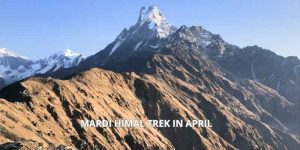
The busiest and the easiest season. Mild days, open road, clean skies. Dhaulagiri and Nilgiri stand sharp behind the temple in the morning light.
Autumn, September to November
Settled weather after the rains, and heavy pilgrim traffic. Flights run more often now. Lodges fill fast around festival days, so book ahead.
Monsoon, June to August
Rain barely touches Muktinath. The trouble is the landslides on the Pokhara side, cancelled flights, and long waits. Janai Purnima falls in this window and brings big crowds anyway.
Winter, December to February
Cold. Below freezing at night, and snow shuts the road for a few days at a time. Half the lodges in Ranipauwa close. But the people who come anyway get an empty courtyard and very clear air.
How Hard Is the Journey to Muktinath?
The walking is easy. The altitude is not. At 3,710 m the air holds about 40 percent less oxygen than at sea level, and your body notices before your legs do.
The danger is speed, not effort. When you fly from Pokhara at 820 m, land in Jomsom at 2,720 m, then drive to 3,710 m by lunch. That is nearly 3,000 m in one morning. Nobody adjusts that fast.
One night in Jomsom or Marpha on the way up cuts the risk a lot. A mild headache, poor sleep, short breath on the first night, all of that is normal. But if it gets worse instead of better, go down. Even Jomsom is usually enough.
At the temple, walk slow. The climb from Ranipauwa is short, yet it bites after a long drive, and rushing it is what makes most visitors feel sick.
Major Treks That Include Muktinath Temple
Muktinath shows up on several routes in the Annapurna region. That is why pilgrims and trekkers end up sharing the same dining room at night.
- Annapurna Circuit Trek. The classic. You reach Muktinath on Day 10, straight after the pass. Our 14 day itinerary starts at USD 855 per person and carries on to Jomsom, Tatopani and Poon Hill. Want the full day by day numbers first? Check our Annapurna Circuit trek distance breakdown.
- Annapurna Circuit with Tilicho Lake and Poon Hill. A 16 day version. It adds the Tilicho detour from Manang, then rejoins the main trail toward the pass and Muktinath.
- Upper Mustang Trek. The restricted route to Lo Manthang starts at Kagbeni, a short drive from Muktinath, and most itineraries take in the temple first.
- Short pilgrim tours. Three or four days. Fly to Jomsom, drive up, take darshan, come back the same way.
What Should You Know Before Visiting?
A few small things that make the day go smoother.
- Timings. The shrine opens early morning and closes in the evening, with a break around midday. Ask locally, because the hours move with the season and with festivals.
- Dress and conduct. Cover shoulders and knees. Shoes off before the inner shrine. Walk clockwise around the temple. Photos are fine in the courtyard, not inside the sanctum.
- Cash. Bring enough rupees. ATMs in Jomsom are unreliable and Ranipauwa has none, and lodges will not take your card.
- Layers. Cold morning, strong sun by ten, wind all afternoon. A windproof jacket, a sun hat and sunscreen do more work here than a heavy down coat.
- A spare day. Flights get cancelled. Roads close. One buffer day saves the whole trip.